
If you’ve ever wandered through the damp woodlands of East Sussex in autumn or winter, you might spot a curious, ear-shaped fungus clinging to an old branch. This is the Wood Ear, Auricularia auricula-judae, a fascinating fungus both for its unusual appearance and its culinary uses. Easy to recognize and surprisingly versatile in the kitchen, it’s a must-know for any forager.
Description & Identifying Features:
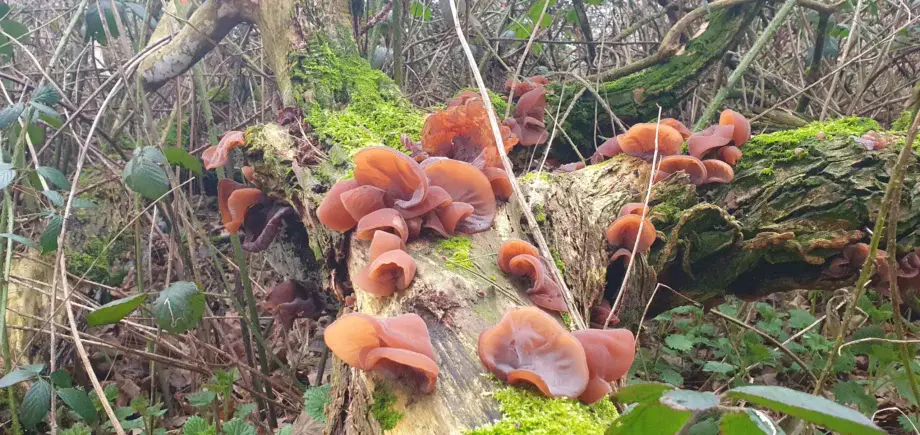
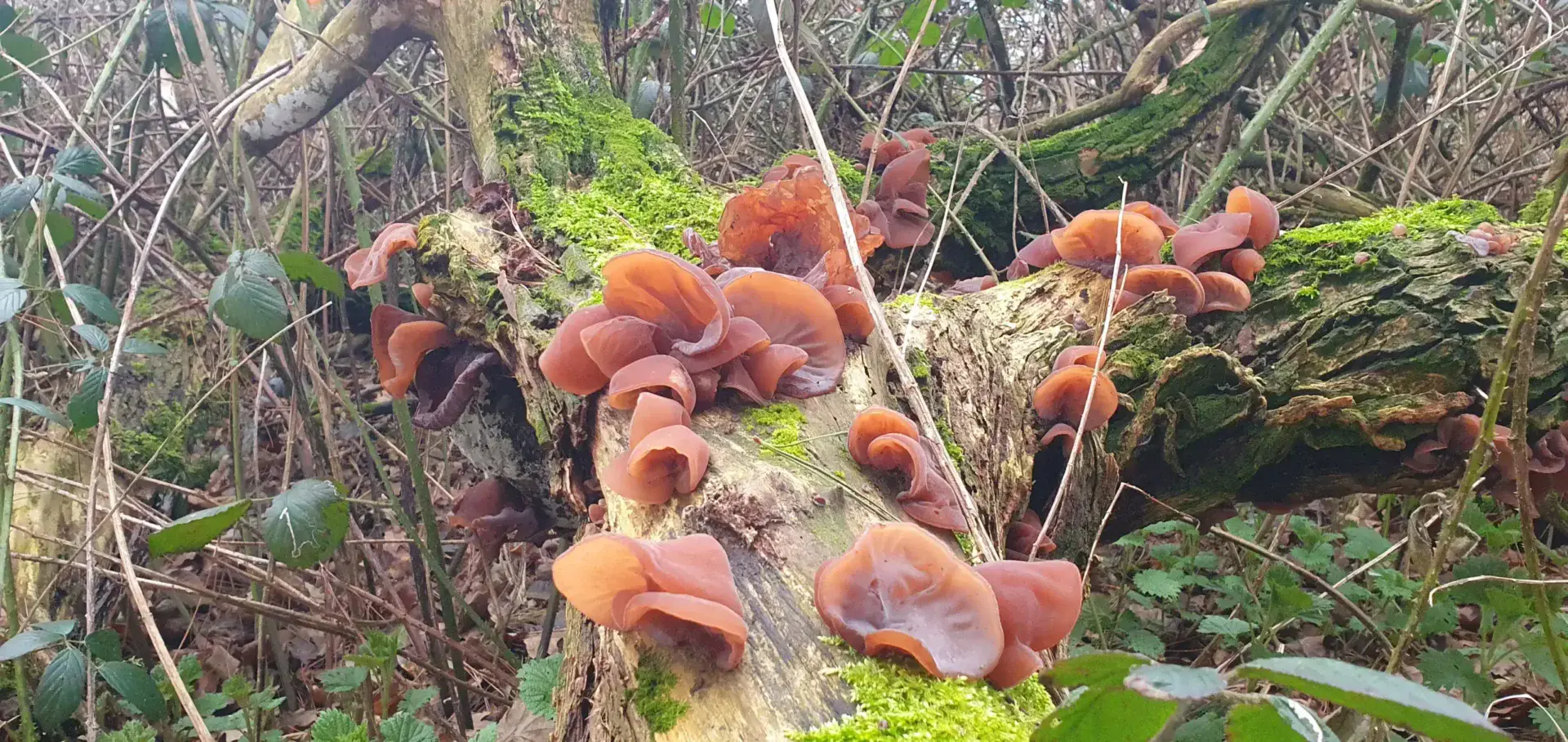
Wood Ear is unmistakable once you know what to look for. It has that classic ear-like shape, a soft, jelly-like texture when fresh, and a smooth, slightly veined surface. The color ranges from light brown to a deeper reddish-brown, and it’s thin, flexible, and slightly rubbery to the touch. When dried, it becomes tougher and leathery but rehydrates easily. Unlike many mushrooms, it doesn’t have gills — its underside mirrors the smooth, veined surface of the top.
Habitat:
This fungus is a true lover of wood, often appearing on dead or dying branches of elder trees, though other deciduous trees can host it too. You’ll usually find it in damp, shaded corners of the woodland, sticking out from fallen branches or the trunks of living trees. Its subtle presence blends beautifully with moss and leaf litter, so keep your eyes peeled.
Time of Year:
Wood Ear is a winter-friendly fungus, appearing from autumn through to early spring. Even when the weather turns cold, it can still be found on sheltered branches, making it one of the more reliable fungi to forage in East Sussex during the off-season.
Safety & Edibility:
Good news for foragers — Wood Ear is edible and safe to enjoy when correctly identified. Its mild flavor makes it perfect for adding texture rather than taste. It’s a classic ingredient in soups, stir-fries, and salads, particularly in Asian cuisine, where its crunchy, jelly-like consistency is prized. Always cook it thoroughly before eating, and if you’re new to foraging, double-check your identification before tucking in.
Foraging Tips:
- Look closely at elder trees first — Wood Ear favors this host, though other deciduous trees can be productive.
- Check damp, shaded areas where humidity helps the fungus thrive.
- Harvest gently by cutting or twisting it off the branch rather than pulling, to avoid damaging the tree or surrounding fungi.
- Avoid overly decayed or slimy specimens; they should be firm and pliable.
- Store in a paper bag in the fridge for a few days or dry them for longer-term use — they rehydrate beautifully in soups and stews.
- Go with a guide if you’re new to foraging — it’s a great way to learn safe identification while enjoying the woodland.
Conclusion:
Next time you’re wandering East Sussex woodlands on a crisp winter day, keep an eye out for the distinctive Wood Ear. Its unusual shape, fascinating texture, and culinary potential make it a fun and rewarding fungus to discover — a small woodland treasure ready to add a bit of crunch to your seasonal recipes.