Scarlet Elfcup (Sarcoscypha austriaca) – A Beginner’s Guide for UK Foragers
Safety & Edibility
Scarlet Elfcups are edible and completely safe to handle, but don’t expect a burst of flavour. Their taste is very mild, almost neutral, which makes them better for visual appeal than as a main ingredient. They’re perfect as decorative “cups” in salads, lightly fried with garlic, or just to add a splash of colour to a dish. Before using them, it’s important to clean thoroughly: dirt, tiny hairs, and woodland debris often hide inside the cup. A quick rinse and gentle brush usually does the trick. While they’re safe, like all wild fungi, avoid eating large quantities until you’re confident in your identification.
Description & Identification
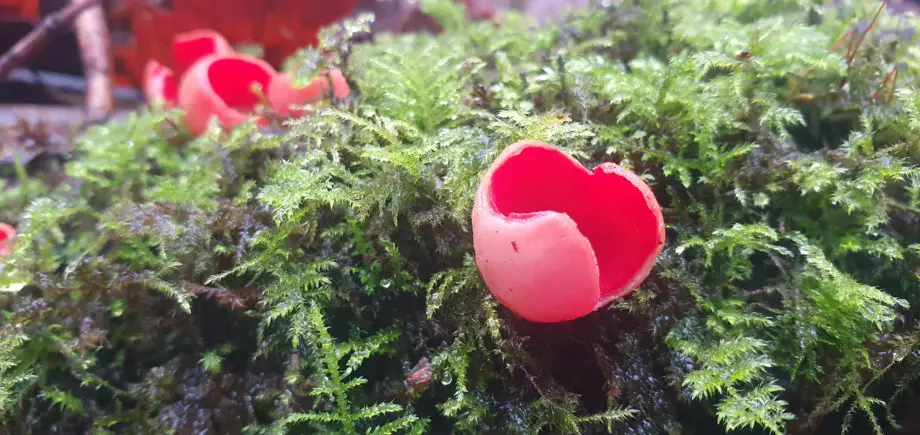
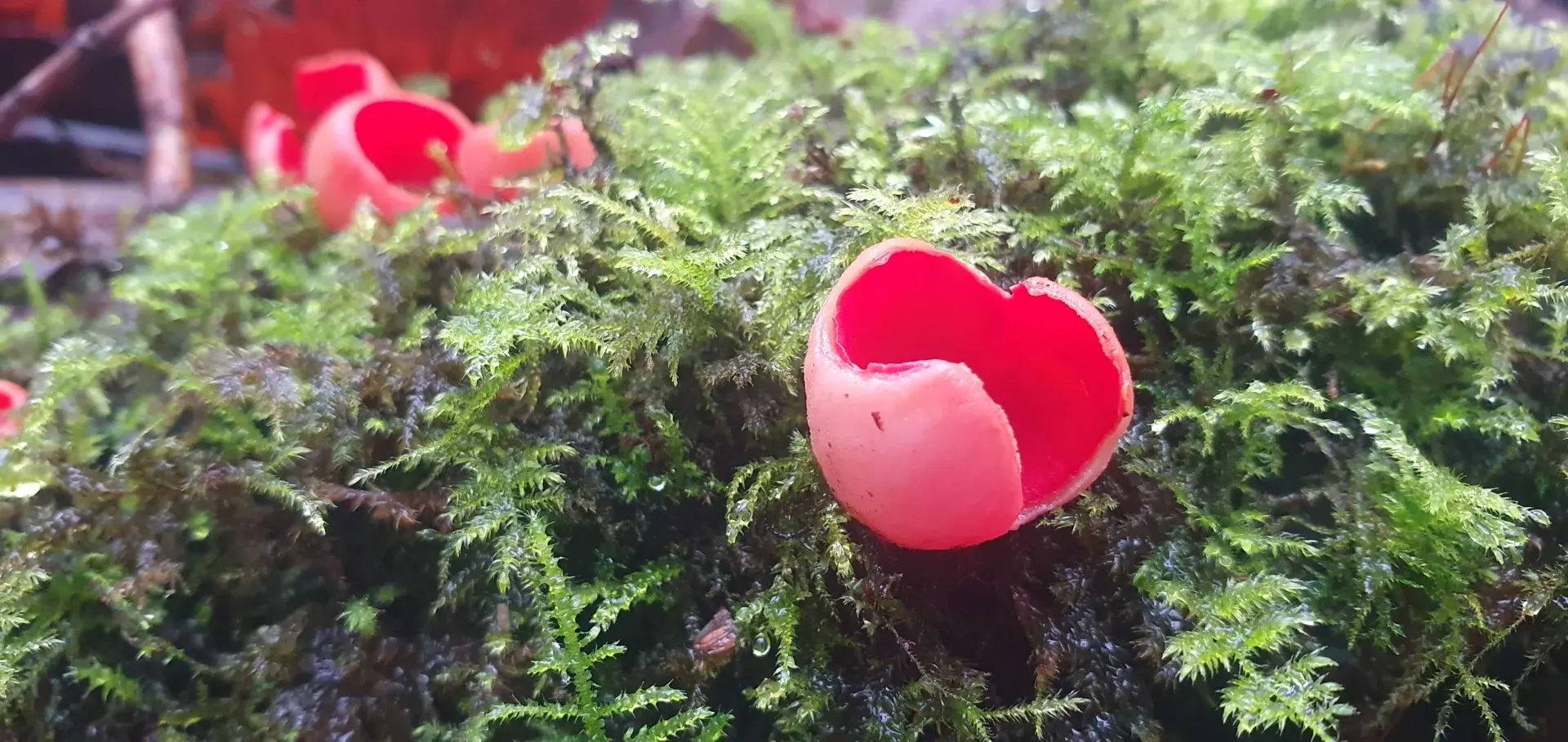
The first thing you’ll notice about the Scarlet Elfcup is its brilliant red interior—it really stands out against winter woodland floors. The outside is pale, almost white, with a soft, felted texture. Tiny hairs often cover the edges, giving the cups a slightly fuzzy look. These cups usually grow individually or in small clusters, and their size ranges from 2 to 5 cm across.
A common lookalike is Sarcoscypha coccinea. In the UK, S. austriaca is more frequently found, and while microscopic examination is needed to tell them apart for certain, beginners can safely rely on the bright red interior, the white felted exterior, and the small hairs along the edge to identify Scarlet Elfcups.
Habitat & Timing
Scarlet Elfcups love damp, sheltered woodland areas. In the UK, ideal spots include the High Weald and the wooded hangers of the South Downs, though they can appear in any moist, deciduous woodland. They grow on decaying hardwood sticks buried in leaf litter, often hidden until you spot that vivid red cup peeking out from the brown leaves.
Timing is also important. These fungi appear in late winter through early spring—roughly December to March. They’re easiest to find after heavy rain, when the woodland floor is damp and the cups are at their brightest. On frosty days, the red cups can almost glow against the muted tones of leaf litter and bark.
Foraging Tips
When harvesting, be gentle. Twist or cut the cup at its base rather than pulling, to avoid damaging the underlying mycelium. Leaving part of the fungus ensures it can grow again next season. Ethical foraging is especially important with delicate species like this: leave some behind for the woodland ecosystem—and, of course, “for the fairies.”
Look carefully after wet weather, as Scarlet Elfcups can hide beneath leaves or moss. Because they’re small and fragile, handling them gently is key if you want to use them in cooking or decoration. Even though they’re edible, remember that their main value is aesthetic: they bring a pop of winter colour to woodland walks or a creative touch to your plate.
Scarlet Elfcups are a great species for beginners. They’re fairly easy to spot once you know what to look for, completely safe to handle, and a rewarding addition to a winter or early spring woodland walk. Even if you don’t use them in cooking, just spotting these tiny red cups tucked into the leaf litter is a treat for any nature enthusiast.