
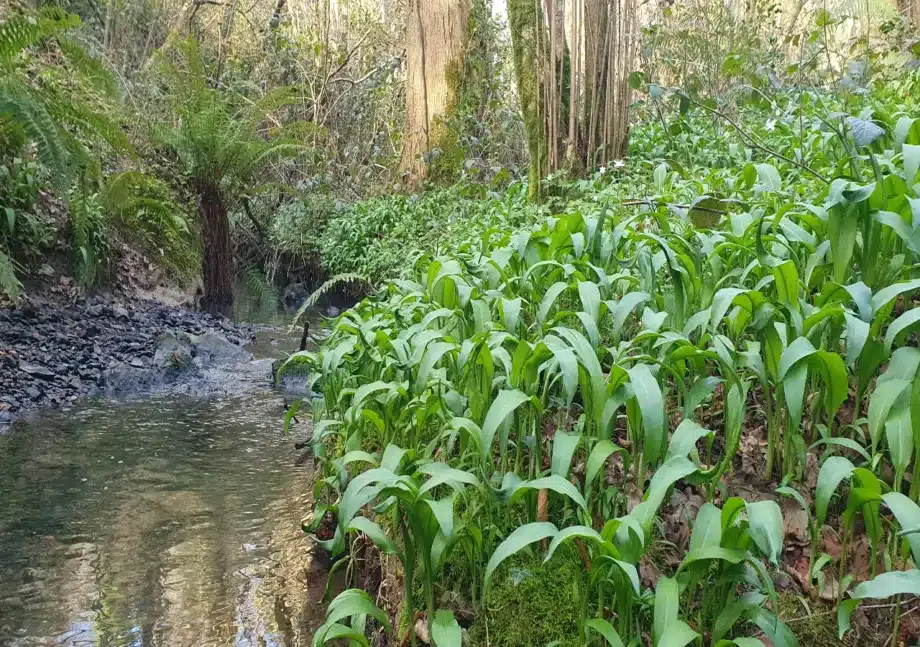
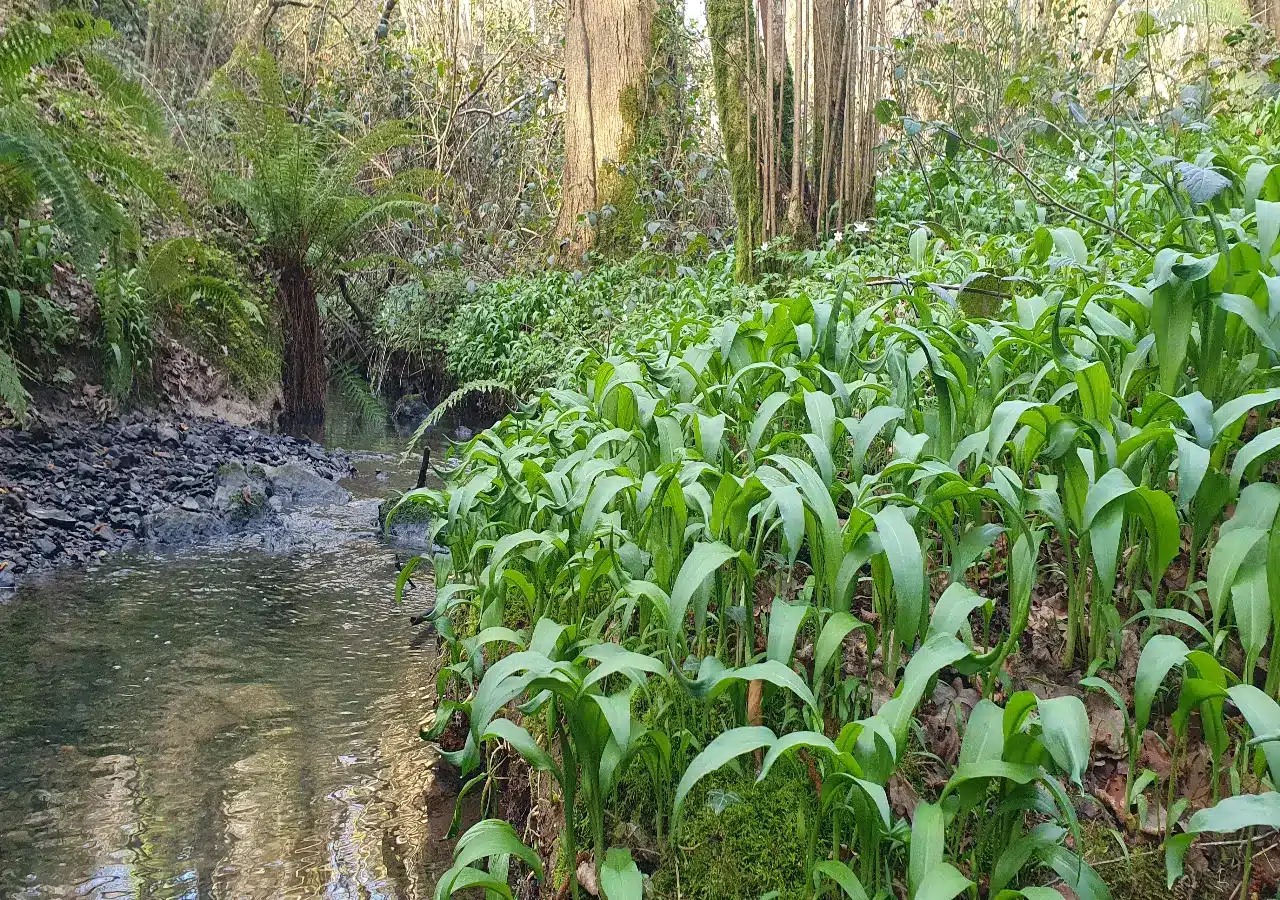
Wild garlic, also known as ramsons, is one of the most exciting plants to forage in spring. With its fresh garlic flavour and vibrant green leaves, it’s perfect for adding to soups, salads, sauces, and pestos.
If you’ve ever walked through a woodland in spring and smelled garlic in the air, chances are you’ve found a patch of wild garlic.
Safety and Edibility
Wild garlic is a delicious and versatile edible plant used in both culinary and traditional medicinal ways. The entire plant is edible , leaves, stems, flowers, and bulbs.
It has a distinct garlic aroma, which makes it easier to identify than many wild plants.
However, it’s essential to be 100% certain of identification before eating any wild plant. Wild garlic can sometimes be confused with poisonous plants such as Lily of the Valley or Lords and Ladies, which looks similar but does not smell of garlic.
Golden rule:
If you are unsure , leave it out.
How to Identify Wild Garlic
Correct identification is the key to safe foraging. Look for these characteristics:
Key Features
Leaves
Broad, lance-shaped green leaves that grow in clusters directly from the ground.
Smell
Crushing a leaf releases a strong garlic smell. This is the most reliable identifier.
Flowers
Clusters of small white star-shaped flowers appear between April and June.
Bulb
A small elongated bulb sits just below the soil surface.
Where and When to Find It
Wild garlic thrives in damp, shady environments, particularly in ancient woodlands.
Here in East Sussex, it often carpets woodland floors and grows along stream banks and shaded paths. It can also appear in areas of chalk downland woodland edges.
The best time to forage for wild garlic is March to May, before the flowers fully open. At this stage the leaves are tender, vibrant, and full of flavour.
Later in the season the leaves become tougher, but the flowers are also edible and make a beautiful garnish.
Sustainable Foraging Tips
Wild garlic grows abundantly in some places, but it’s still important to harvest responsibly.
Follow these simple guidelines:
Only take what you need
Avoid stripping large areas or taking more than you will use.
Leave the bulbs
Harvest the leaves instead of digging up the bulbs so the plant can regrow.
Avoid trampling
Stick to paths and avoid walking through dense patches.
Get permission
If you are foraging on private land, always ask the landowner first. Many Sussex farms are happy for responsible foraging.
Share the knowledge
Encourage others to forage sustainably so these patches remain for years to come.
Wild Garlic Pesto Recipe
One of the best ways to use fresh wild garlic is in a simple pesto. It’s quick to make and keeps well in the fridge.
Ingredients
-
100g fresh wild garlic leaves
-
50g pine nuts (or walnuts as a cheaper alternative)
-
50g grated Parmesan cheese
-
100ml olive oil
-
Juice of half a lemon
-
Salt and pepper to taste
Method
-
Wash the wild garlic leaves thoroughly and pat dry.
-
Add the leaves, nuts, and Parmesan to a food processor.
-
Pulse until roughly chopped.
-
Slowly add the olive oil while blending until you reach a smooth consistency.
-
Add lemon juice, salt, and pepper to taste.
-
Blend briefly again to combine.
How to Use It
Wild garlic pesto is incredibly versatile:
-
Stir through fresh pasta
-
Spread on toast or sandwiches
-
Mix into soups or risottos
-
Use as a marinade for chicken or fish
-
Drizzle over roasted vegetables
Store in a jar in the fridge for up to one week, or freeze in ice cube trays for longer storage.
Final Thoughts
Wild garlic is one of the easiest and most rewarding plants to forage in spring. With proper identification and sustainable harvesting, you can enjoy its incredible flavour while helping preserve local woodland ecosystems.
Whether you add it to soups, salads, or a fresh homemade pesto, wild garlic is a true seasonal treat from nature.