
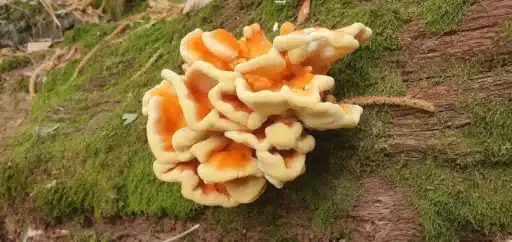
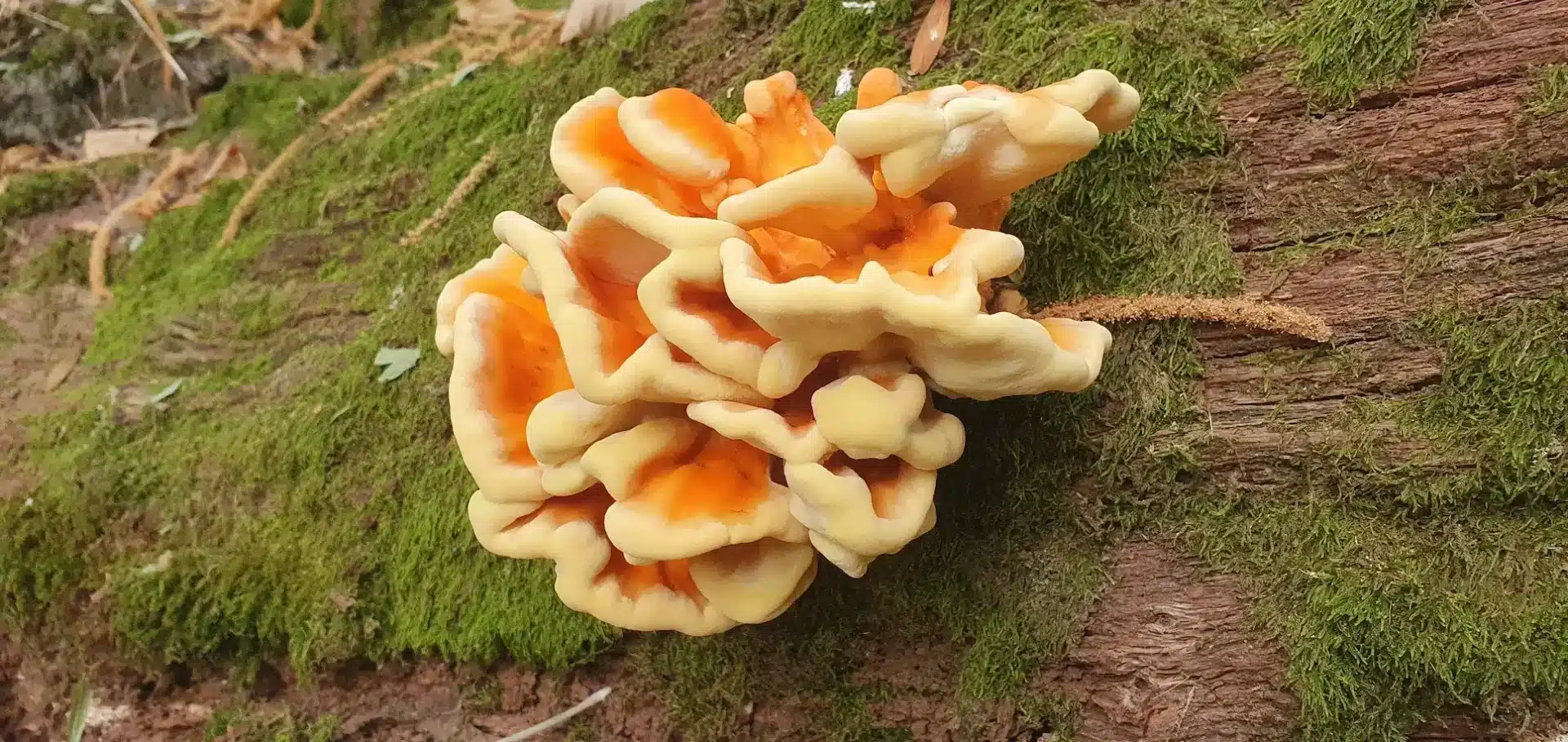
As a local forager, there’s nothing quite like the thrill of spotting a vibrant splash of orange and yellow in the trees. Today, we’re talking about one of the most exciting finds for beginners: Chicken of the Woods (Laetiporus sulphureus). It’s a real treat, but like all wild foods, knowing what you’re doing is key. Let’s get started!
Safety and Edibility
Chicken of the Woods is widely considered an excellent edible mushroom, often praised for its texture and flavour, which genuinely resembles chicken. It’s a fantastic substitute in many dishes, whether you’re frying it up or adding it to stews. However, there are a few important points for safe enjoyment, especially for beginners.
- Cook Thoroughly: Always cook Chicken of the Woods well. Eating it raw or undercooked can cause an upset stomach for some people.
- Try a Small Piece First: Even with well-known edibles, it’s wise to try a small amount the first time you eat it. Your body might react differently than someone else’s.
- Tree Host Matters: This is crucial! While usually safe, Chicken of the Woods growing on yew, eucalyptus, or sometimes conifers can absorb toxins from the tree, making it poisonous. Always ensure it’s growing on a hardwood tree like oak, cherry, or sweet chestnut, which are common here in Sussex. If in doubt, leave it out.
- Younger is Better: Younger specimens are tender and more flavourful. Older ones can become tough and woody. If you give it a gentle pinch it should feel spongy and not chalky.
How to Identify Chicken of the woods
Spotting Chicken of the Woods is often straightforward because of its striking appearance. It doesn’t really look like anything else edible you’d find in the UK.
Key Features
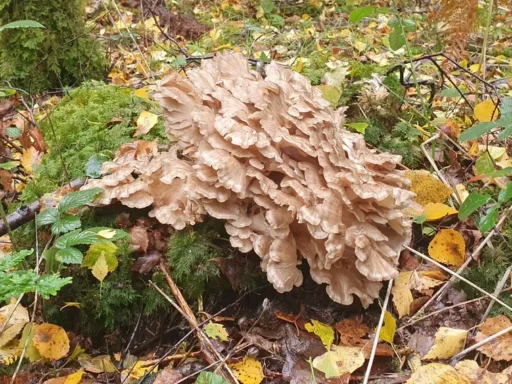
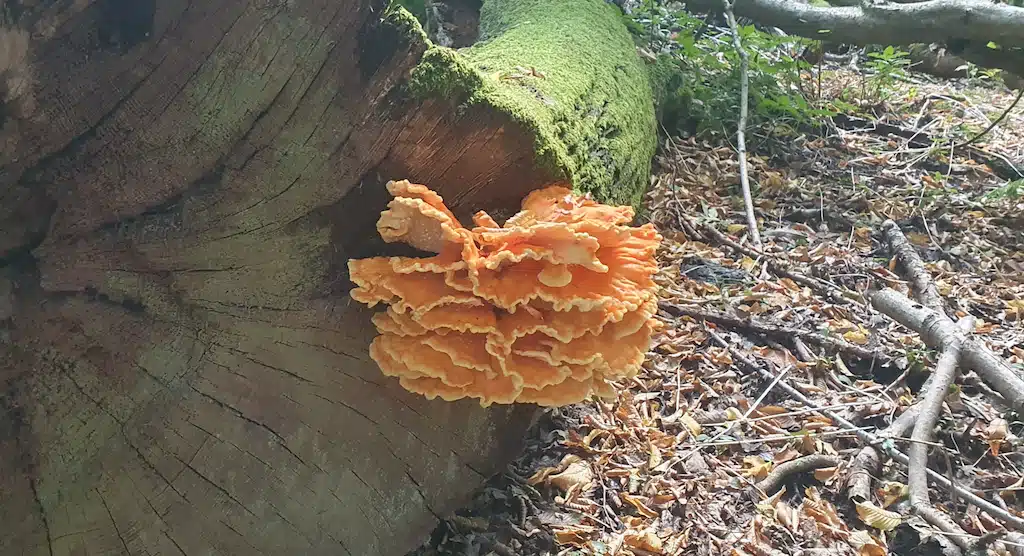
- Cap (or Brackets): This mushroom grows in large, overlapping, shelf-like brackets or rosettes on tree trunks or stumps. The colours are incredibly vivid – bright yellow to brilliant orange, sometimes with lighter yellow margins. They can grow quite large, sometimes weighing several kilograms.
- Pore Surface (No Gills!): This is a vital identifier! Unlike many mushrooms that have gills underneath, Chicken of the Woods has a smooth to finely porous underside, typically a bright sulphur-yellow colour. If you see gills, it’s not Chicken of the Woods.
- Stem: It generally doesn’t have a true stem. The brackets attach directly to the wood.
- Spore Print: A white to pale yellow spore print, though you rarely need to do one given its distinct look.
- Flesh: When fresh, the flesh is soft, juicy, and white to pale yellow. It should smell mildly mushroomy, sometimes slightly citrusy.
Where and When to Find It
Here in East Sussex, we’re lucky to have plenty of excellent habitats for Chicken of the Woods. You’ll primarily find it growing on deciduous trees.
- Habitat: Look for it on dead or dying hardwood trees, particularly oak, sweet chestnut, cherry, and willow. Sometimes you’ll find it on living trees where it acts as a parasitic fungus, eventually contributing to the tree’s decay. Ancient woodlands and mature parks, common across our Sussex landscape, are prime spots.
- Timing: The season generally runs from late spring through to late autumn, typically May to October. You’ll often find it flourishing after a good spell of rain, especially in the warmer months of summer and early autumn. Keep your eyes peeled on woodland walks!
Sustainable Foraging Tips
Responsible foraging ensures that there’s plenty for everyone and that the fungus can continue to thrive for years to come.
- Leave Some Behind: Always take only a portion of what you find. If you see a large flush, take what you need and leave the rest to drop spores and feed other creatures.
- Cut Cleanly: Use a sharp knife to cut the mushroom cleanly from the tree, rather than pulling and damaging the underlying mycelium.
- Respect Land Ownership: Always ensure you have permission to forage on private land. Stick to public footpaths and areas where foraging is permitted. Here in Sussex, many of our beautiful woodlands are private, so do check first.
- Carry a Basket: A basket or a paper bag is better than a plastic bag for carrying your finds, as it allows air circulation and helps preserve the mushrooms.
- Be 100% Sure: If you have even the slightest doubt about an identification, do not eat it. Consult an expert or a reliable field guide. Your safety is paramount.
Happy foraging, and enjoy your delicious Chicken of the Woods!