
Safety and Edibility
Hen of the Woods (Grifola frondosa), also known as maitake, is a choice edible mushroom. It has a rich, savoury flavour and a firm, meaty bite that holds up well in cooking. While completely non-toxic, it should always be cooked thoroughly before eating. Raw specimens can cause mild digestive upset in some people. It also has a long history in herbal medicine, often studied for potential immune-supporting properties. Always avoid specimens showing signs of rot, mould, or insect infestation, and ensure you are confident in your identification before eating any wild mushroom.
How to Identify Hen of the Woods
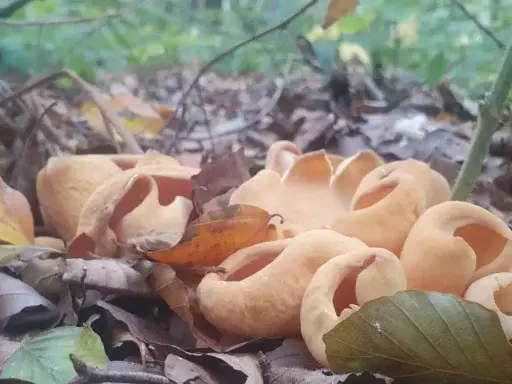
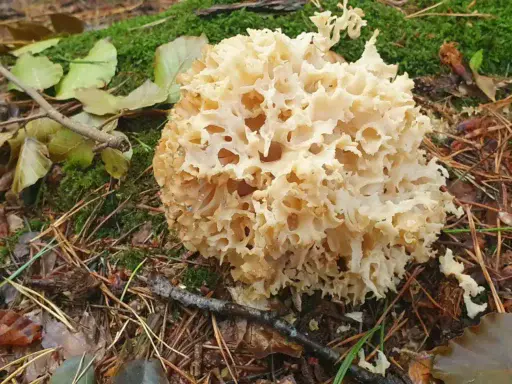
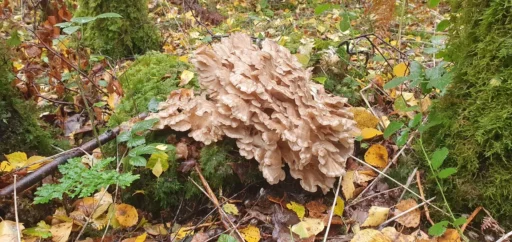
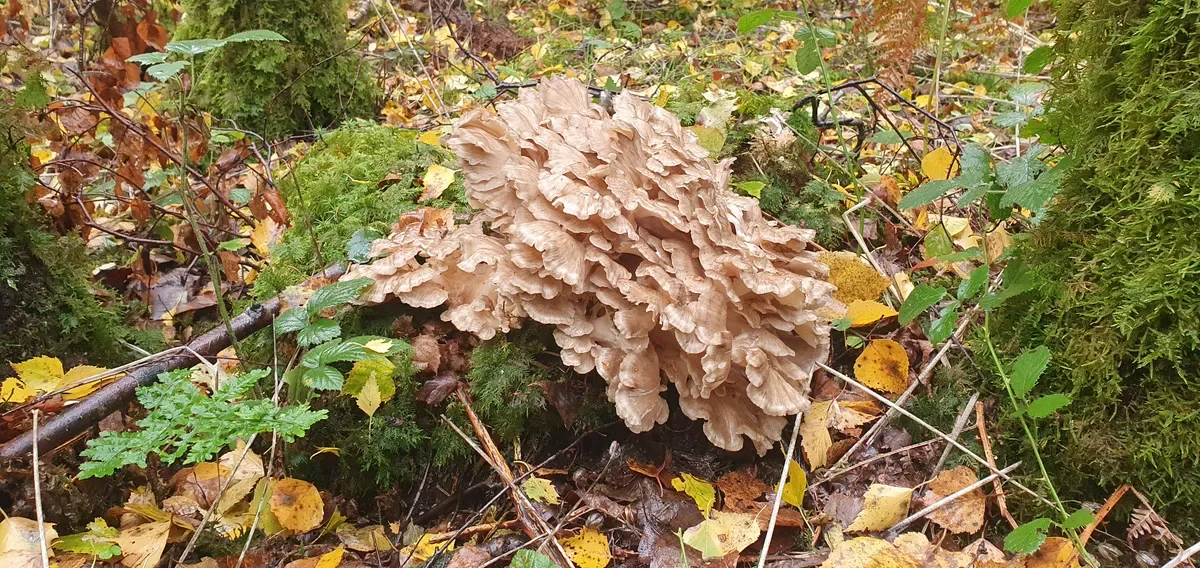
This mushroom earns its common name from its resemblance to the ruffled plumage of a hen sitting at the base of a tree. It forms a dense, rosette-like cluster made up of dozens of small, overlapping fronds.
Key Features
- Caps: Spoon- or fan-shaped, ranging in colour from smoky grey to light earthy brown. Edges are wavy, ruffled, and often paler than the centre. Clusters can grow anywhere from 10 cm to over 40 cm across.
- Underside (Pores): Hen of the Woods does not have gills. The underside is covered in tiny, white-to-cream pores that run down the stem-like branches. These pores do not turn black when bruised.
- Stem: A thick, white, branched central base anchored to tree roots or wood buried in the soil.
- Spore Print: White.
Where and When to Find It
In the UK, the season runs through autumn, typically starting in late August and ending in November, with peak flushes during September and October. Hen of the Woods grows primarily at the base of mature, living oak trees (Quercus robur and Quercus petraea) or around old oak stumps. In East Sussex, your best opportunities lie in established broadleaf woodlands, ancient wood pasture, and historic parklands across the High Weald or the lower margins of the South Downs. Keep your eyes trained right at the soil line against the tree trunk, as the clusters emerge directly from the root buttresses.
Sustainable Foraging Tips
Because Hen of the Woods can take several weeks to mature, harvest with care to protect local populations. Never rip the cluster from the ground. Instead, use a clean, sharp knife to cut away sections of fresh fronds, leaving the central base and smaller immature lobes intact so they can continue to drop spores. Always check land access rules before foraging; many ancient Sussex woodlands are Sites of Special Scientific Interest (SSSIs) or nature reserves where harvesting is prohibited. Brush off soil and loose debris in the woods so that you leave the forest floor organisms and spores in their natural habitat.