
Introduction:
The Hare’s Ear fungus, Otidea onotica, is a delicate and unusual woodland fungus often overlooked by foragers in East Sussex. While it isn’t edible, its distinctive shape and subtle colors make it a fascinating find for anyone interested in the hidden wonders of the forest floor.
Description & Identifying Features:
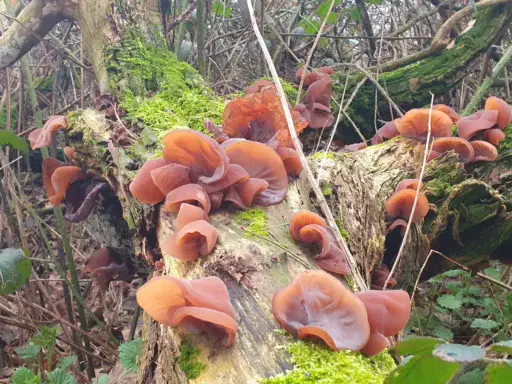
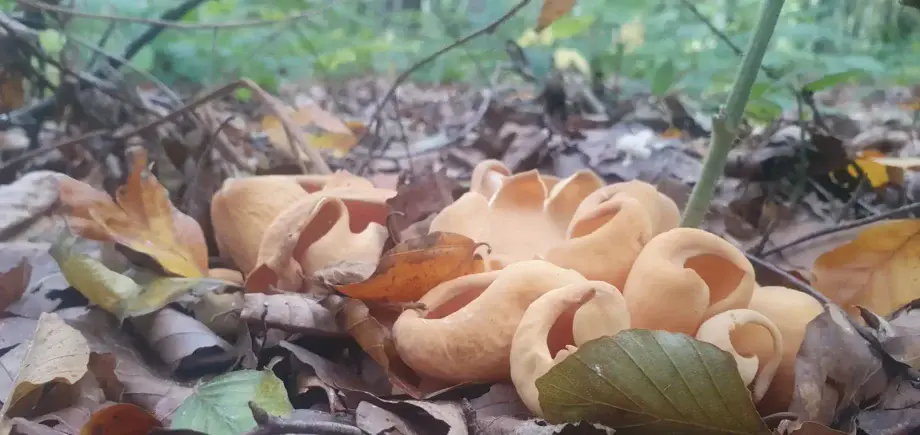
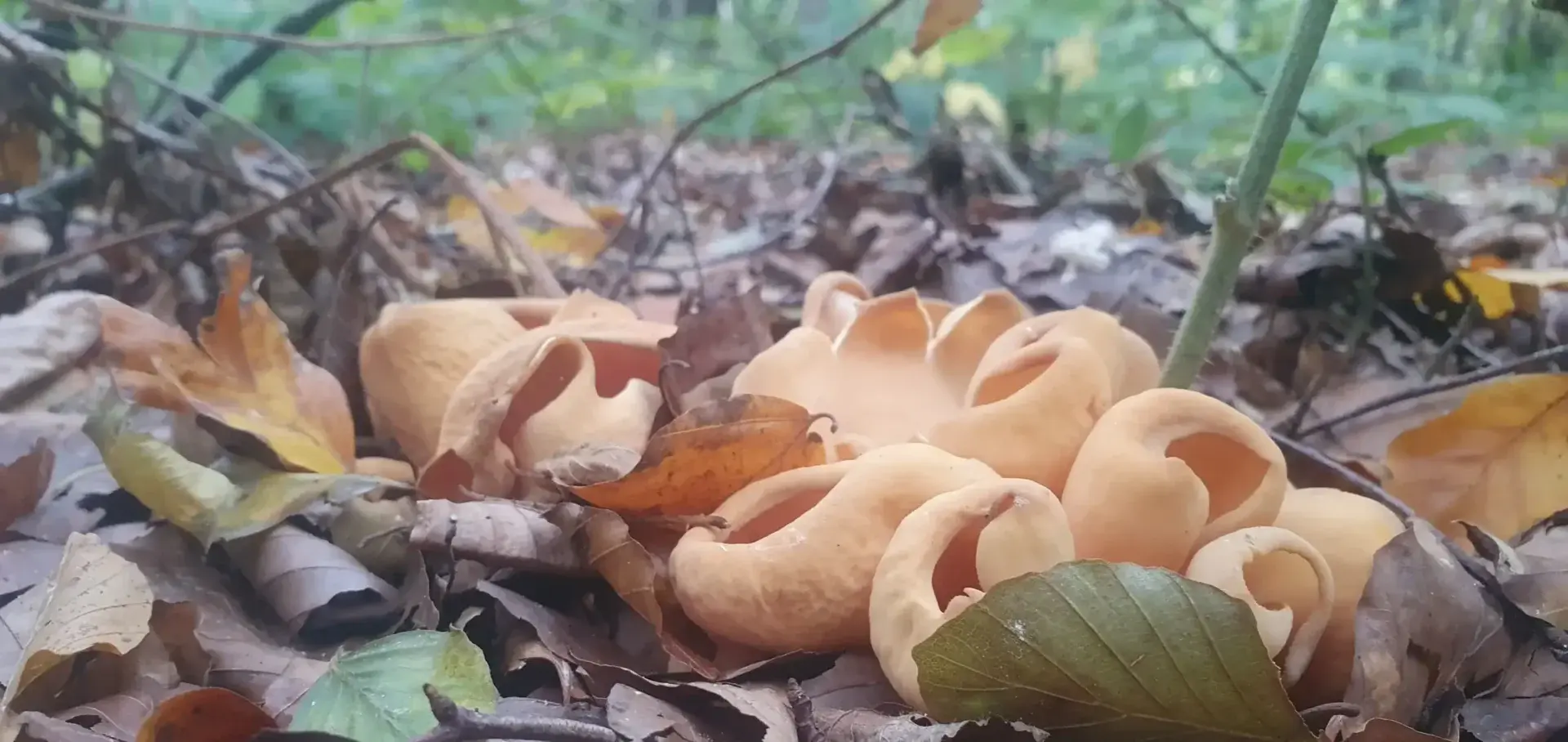
True to its name, Hare’s Ear has a slender, cup-like shape resembling a rabbit’s ear. The fungus is usually pale yellow to light brown, with a smooth outer surface and a slightly darker, sometimes wrinkled inner cup. Individual “ears” are thin and upright, often growing in small clusters from the forest litter. Its fragile, cup-like form distinguishes it from many other woodland fungi, and it tends to fade to a paler shade as it ages.
Habitat:
Hare’s Ear typically grows on moist leaf litter and humus-rich soil, often under deciduous trees such as beech or oak. It is a woodland specialist, favoring shaded, undisturbed areas where organic matter accumulates, and it’s often found in small groups scattered across the forest floor.
Time of Year:
This fungus appears in late autumn through winter, thriving in damp, cool conditions. Its subtle colors and delicate structure mean it can easily blend in with fallen leaves, so careful observation is needed to spot it.
Safety & Edibility:
Hare’s Ear is inedible, and foragers should avoid consuming it. While it poses no known toxicity, its small size, fragile texture, and lack of culinary value make it unsuitable for the kitchen. It is, however, a fascinating species to observe and photograph in its natural habitat.
Foraging Tips:
- Look carefully in shaded deciduous woodland, especially under beech and oak trees.
- Keep an eye on damp leaf litter; the fungus blends well with fallen leaves.
- Observe gently — it’s fragile, so avoid handling roughly.
- Use it as a learning species to practice identification skills and familiarize yourself with woodland fungi diversity.
- Photograph rather than pick — it makes a beautiful addition to a foraging journal without needing to be collected.
Conclusion:
While you won’t be cooking Hare’s Ear, discovering this subtle, cup-shaped fungus in East Sussex woodlands is a treat for any nature enthusiast. Its delicate form and understated charm offer a quiet reminder of the richness and diversity of the forest floor, especially in late autumn and winter.