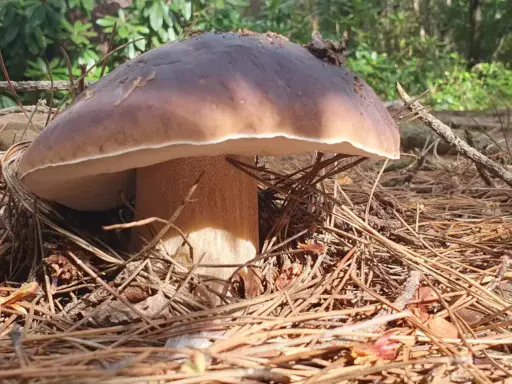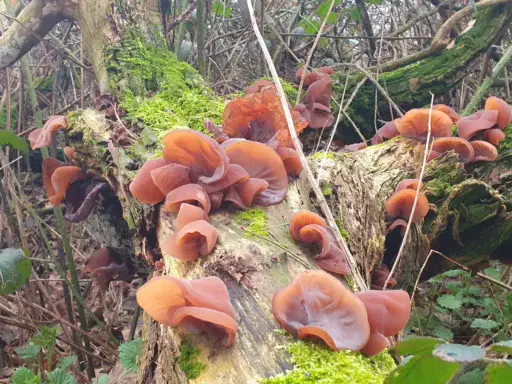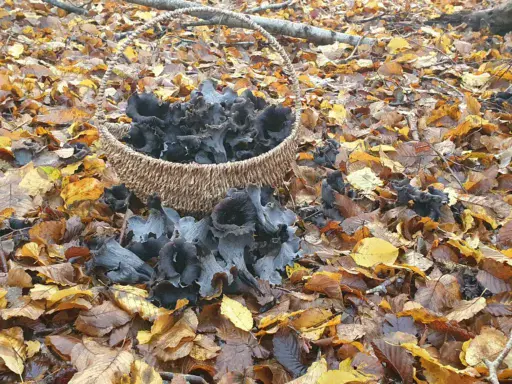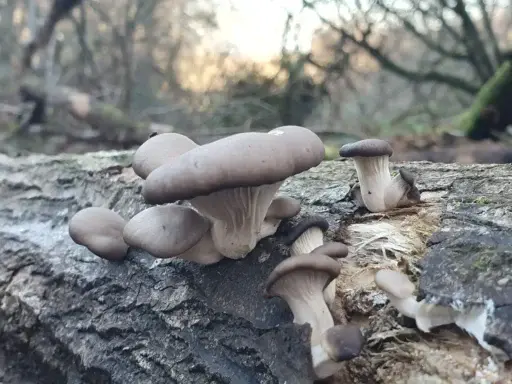

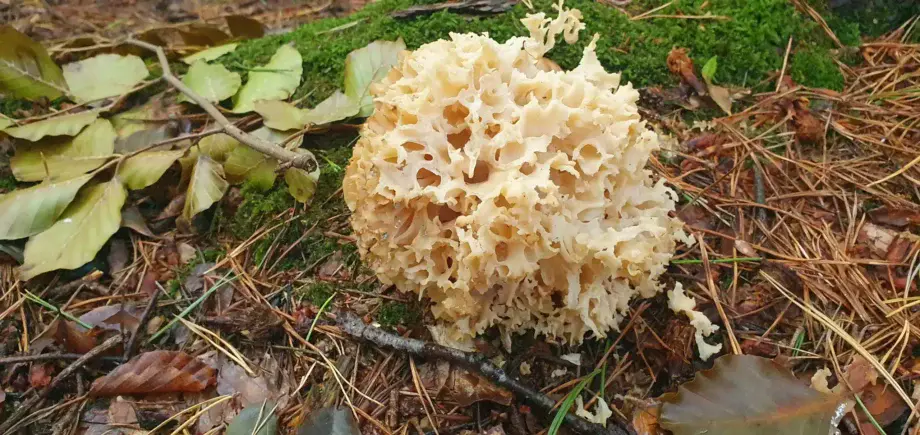
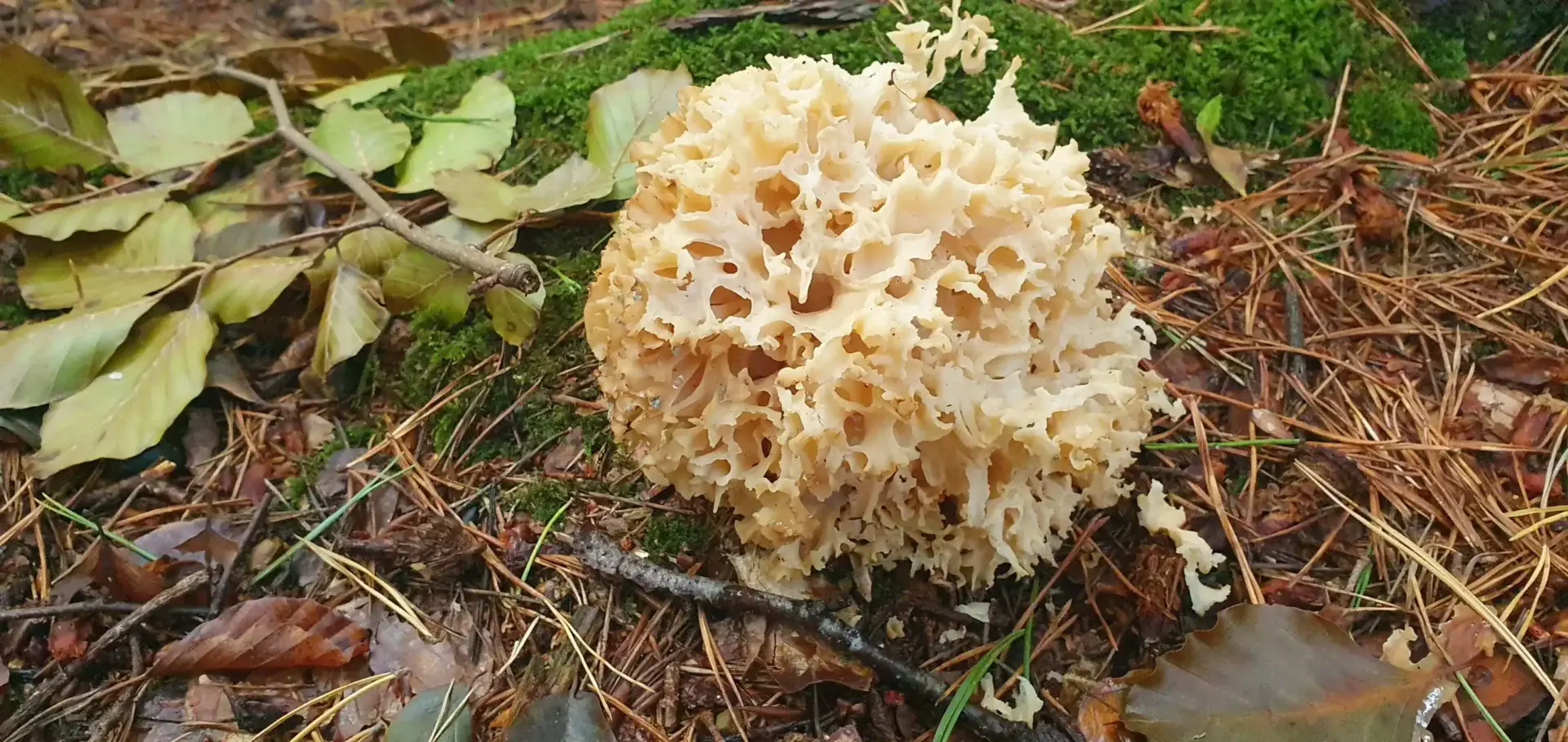
The Cauliflower Mushroom, Sparassis crispa, is one of the most striking and unusual fungi you can find in East Sussex woodlands. Its intricate, brain-like structure makes it instantly recognizable, and its delicate, nutty flavor has earned it a special place in the kitchen. Foragers are often thrilled to stumble across this impressive fungus tucked away at the base of pine trees.
Description & Identifying Features:
True to its name, the Cauliflower Mushroom resembles a large, frilly cauliflower or a tightly-packed cluster of cream-colored coral. The individual lobes are thin, wavy, and slightly brittle when fresh, with a creamy to pale yellow color that deepens slightly with age. The fungus grows in a dense, rounded clump, sometimes reaching the size of a small basketball. Its base attaches firmly to the tree root or stump, making it easy to distinguish from other fungi.
Habitat:
Cauliflower Mushroom favors pine and occasionally other conifer roots, often appearing at the base of old or stressed trees. It can also be found near stumps or buried roots, thriving in well-drained, mossy woodland soil. Look carefully around the root zone — the fungus blends with leaf litter and moss until you know what to spot.
Time of Year:
This species is typically found from late summer through autumn, although in mild conditions it can occasionally persist into early winter. Its presence is highly seasonal, often appearing after wetter periods when the forest floor is moist.
Safety & Edibility:
Cauliflower Mushroom is edible, safe, and highly prized for its delicate, nutty flavor and crisp texture. It works beautifully in soups, risottos, stir-fries, and sautéed dishes. As with all wild mushrooms, cook thoroughly before eating, and only consume specimens you are confident in identifying.
Foraging Tips:
- Check the base of pine trees carefully — this is where it most commonly grows.
- Look for large, creamy clusters peeking through leaf litter or moss.
- Harvest by cutting at the base rather than pulling to avoid damaging the mycelium underground.
- Avoid old or rotting specimens; the fresh, firm lobes are best.
- Store in the fridge for a few days or lightly dry for longer-term use — it keeps its flavor and texture well.
- Go with a guide if it’s your first time — it’s large and unmistakable once you know it, but misidentification can happen with smaller, similar coral-like fungi.
Conclusion:
Discovering a Cauliflower Mushroom in East Sussex is a real treat for any forager. Its dramatic appearance and wonderful culinary potential make it a highlight of late summer and autumn walks. Keep your eyes peeled near pine roots, and you may walk away with one of the forest’s most spectacular fungi treasures.