Turkey Tail Fungus (Trametes versicolor)
Turkey Tail, Trametes versicolor, is one of the most common and visually striking fungi found in UK woodlands, including across East Sussex. Named for its resemblance to the layered, colourful feathers of a turkey’s tail, this tough, fan-shaped bracket fungus is instantly recognisable once you know what to look for. While not edible in the conventional culinary sense, Turkey Tail is widely known for its traditional medicinal use and ecological importance.
Description & Identifying Features:
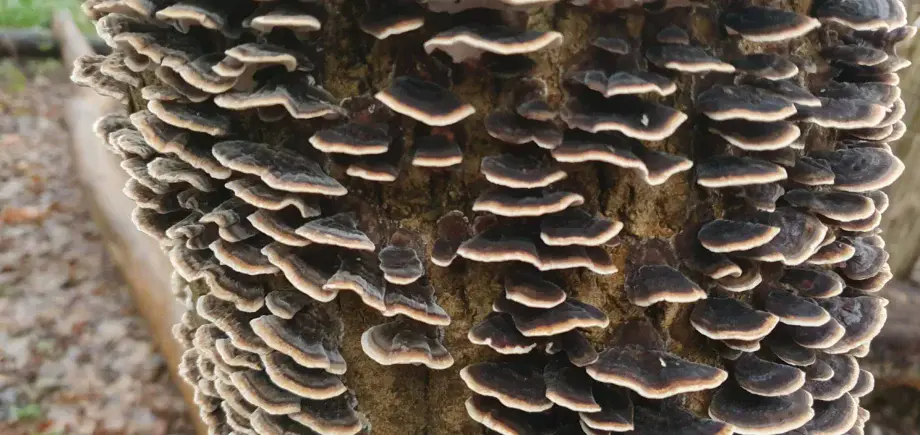
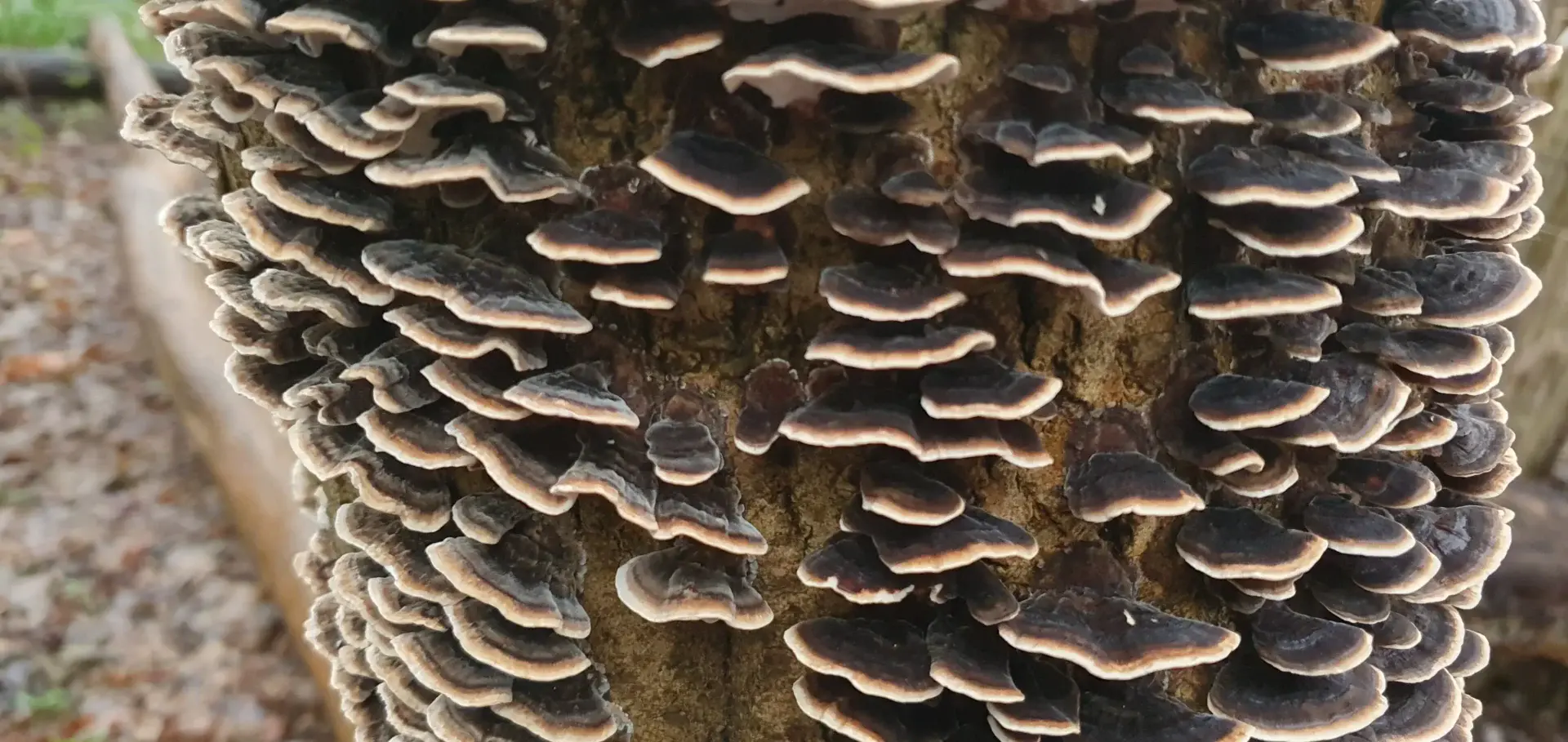
Turkey Tail grows as thin, leathery brackets arranged in overlapping rows on wood. Individual caps are typically 3–8 cm across and display distinct concentric bands of colour, which may include shades of brown, grey, cream, rust, blue, and even green. The surface is finely velvety when fresh, becoming smoother with age.
The underside is pale cream to white and covered in tiny pores rather than gills, a key feature that distinguishes it from similar-looking fungi. The flesh is thin, flexible when young, and tough and woody when mature. Its striking colour variation is the origin of the species name versicolor, meaning “of many colours”.
Habitat:
Turkey Tail is a wood-decaying fungus that grows on dead hardwood, especially fallen logs, stumps, and decaying branches. It is most commonly found on oak, beech, birch, willow, and other deciduous trees, though it can occasionally appear on conifers.
It thrives in damp woodland environments but is equally at home in parks, hedgerows, and even garden wood piles. Because it persists year-round, it is one of the easiest fungi to find once you start looking.
Time of Year:
Turkey Tail can be found all year round in the UK. Unlike many mushrooms, it does not disappear after autumn, instead, the same fruiting bodies often persist through winter and into the following year, fading and weathering over time.
Safety & Uses:
Turkey Tail is not edible as a food mushroom due to its tough, leathery texture. However, it is widely known for its use in teas, tinctures, and extracts, particularly in traditional Chinese and Japanese medicine.
Turkey Tail can be purchased in the UK, although its sale as a food supplement is limited by Novel Food regulations. As a result, it is commonly sold as a botanical ingredient, extract, or for research use rather than for direct consumption. These products are available from UK growers and specialist retailers in forms such as powders, capsules, and tinctures.
Only properly identified specimens should ever be used, and care should be taken to avoid confusing it with similar bracket fungi that lack pores or have thicker, woody flesh. Always consult reliable sources before using wild fungi for medicinal purposes.
Foraging Tips:
- Look for colourful, banded brackets growing in layered clusters on dead hardwood.
- Check the undersid, true Turkey Tail always has tiny pores, not a smooth surface.
- Harvest young, vibrant specimens for best quality.
- Cut cleanly with a knife rather than pulling from the wood.
- Avoid specimens growing on treated or polluted wood.
- Dry thoroughly before storage if preparing for tea or extracts.
- Forage responsibly, taking only what you need.
Conclusion:
Turkey Tail is one of the UK’s most beautiful and enduring fungi. Though not destined for the frying pan, its striking appearance, year-round presence, and long history of traditional use make it a fascinating species for foragers and woodland walkers alike. Once you learn to recognise its colourful, banded shelves on fallen wood, you’ll begin to notice Turkey Tail almost everywhere you go.
Medicinal Use Disclaimer:
This article is for educational purposes only and does not constitute medical advice. While Turkey Tail fungus has a history of traditional use, it is not a licensed medicine in the UK. Do not use wild fungi as a treatment for any medical condition. Always consult a qualified healthcare professional before using herbal or fungal products, especially if you are pregnant, breastfeeding, taking medication, or have a medical condition.