Hello fellow nature enthusiasts! As a local forager here in East Sussex, I often get asked by beginners about good mushrooms to start with. One of my favourites to introduce is the Pale Oyster, or Pleurotus pulmonarius. It’s a wonderful mushroom to find, quite distinct, and a real treat in the kitchen. Let’s get you ready to spot it in our beautiful woodlands.
Safety and Edibility
The good news first: the Pale Oyster is a highly regarded edible mushroom. It has a lovely mild, slightly sweet flavour and a tender texture when cooked, making it very versatile. You can sauté it, roast it, or add it to stir-fries and stews. It’s often used as a meat substitute because of its hearty texture. However, with any wild mushroom, never eat anything unless you are 100% sure of its identification. When in doubt, leave it out. That’s the golden rule for safe foraging.
How to Identify Pale Oyster
Identifying the Pale Oyster is a great first step into mushroom foraging. It grows in clusters and has a distinctive look.
Key Features
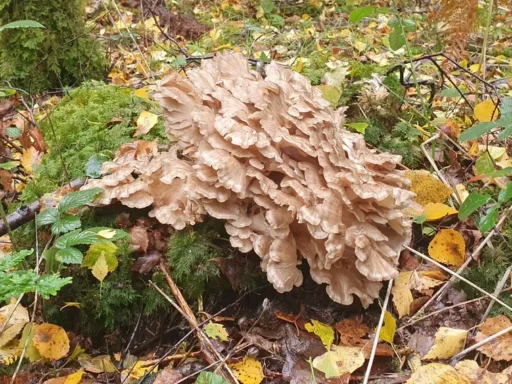
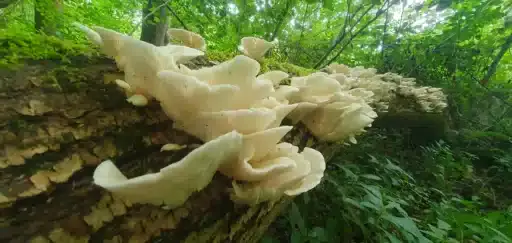
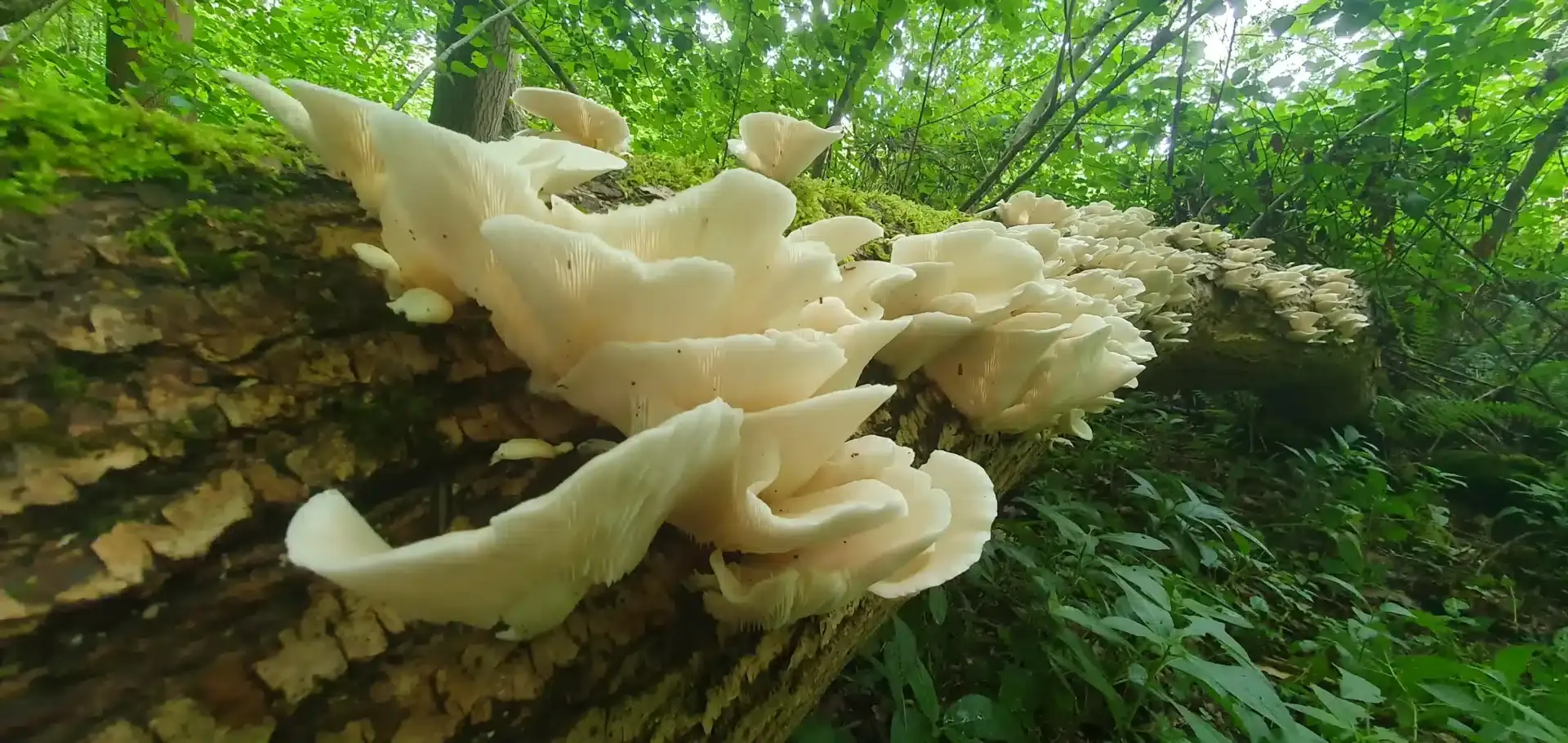
- Cap: This is where it gets its name. The cap is typically pale, often creamy white to light buff or greyish-tan, especially when young. It’s usually oyster or fan-shaped, growing from the side of wood. The surface is smooth and can be a bit moist. Caps can range from 3cm to 15cm across, sometimes larger.
- Gills: The gills are white to creamy, fairly close together, and run down the stem (decurrent). They merge into the stem rather than ending abruptly.
- Stem: The stem is often short, stout, and can be off-centre or entirely absent, especially when growing in dense clusters. It’s usually white or pale, sometimes a bit hairy or fuzzy at the base where it attaches to the wood.
- Spore Print: A spore print is a key identification tool. For the Pale Oyster, you’re looking for a white or very pale lilac-grey spore print. You can get a spore print by placing a cap, gills-down, on a piece of dark paper overnight.
- Growth Habit: Pale Oysters almost always grow in overlapping shelves or clusters directly on dead or dying deciduous hardwoods.
It’s important not to confuse it with other oyster mushrooms, like the darker Common Oyster, but the Pale Oyster’s distinctive light colour usually makes it stand out.
Where and When to Find It
Here in East Sussex, we’re lucky to have some fantastic woodlands where Pale Oysters thrive. You’ll primarily find them growing on dead or dying deciduous trees, such as beech, oak, and sometimes willow. Look for them on logs, stumps, or standing dead trees. They prefer broadleaf forests, which we have plenty of around the South Downs and areas like Ashdown Forest.Timing-wise, the Pale Oyster is a warmer-weather mushroom compared to some other oyster species. You can typically find them from late spring through to early autumn, roughly from May to October, especially after a good spell of rain following dry weather. Keep an eye out during those warmer, wetter months.
Sustainable Foraging Tips
Foraging is about connecting with nature, and we want to ensure our wild spaces remain abundant for years to come.
- Only Take What You Need: Harvest just enough for your meal. Leave plenty behind for other foragers, wildlife, and to allow the fungus to continue its lifecycle.
- Leave No Trace: Be gentle. Don’t damage the host tree or the surrounding environment. Brush any dirt off the mushrooms at the site so the spores fall back where they belong.
- Carry a Basket: Using a breathable basket or mesh bag helps disperse spores as you walk, aiding in the mushroom’s reproduction.
- Know Your Land: Always be aware of where you are foraging. Some areas are privately owned or have specific foraging restrictions (e.g., National Trust properties, SSSIs). Always get permission if you’re on private land.
- Double-Check: If you’re new to foraging, go with an experienced person or use multiple trusted field guides to confirm your identification before consuming anything.
Happy foraging, and I hope you enjoy finding and tasting this wonderful mushroom right here in Sussex!