I’ve spent countless hours wandering our ancient woodlands and chalk downlands. There’s a particular mushroom that always gets my pulse racing, a true gem of our autumn forests: the magnificent Bronze Bolete, also known as *Boletus aereus*. It’s a real prize, prized by chefs and home cooks alike for its incredible flavour. Honestly, I prefer these to the Penny Bun (Boletus Edulis). But, as with all wild edibles, knowing your stuff is key. So, let’s talk about this dark-capped beauty.
Safety and Edibility
The Bronze Bolete is one of the most highly sought-after edible mushrooms in Europe, and for very good reason. It has a rich, earthy, and nutty flavour that stands up beautifully to cooking. You can sauté it with a little garlic and butter, slice it thinly and add it to pasta dishes, or even dry it to preserve its intense flavour for later use in risottos and stews. It’s absolutely delicious.However, and this is crucial: you must be 100% certain of your identification before you ever think about eating a wild mushroom. There are other boletes out there, some edible and some not. Stick to the identifying features we’ll discuss, and if you have even a sliver of doubt, leave it be.
How to Identify Bronze Bolete
Spotting a Bronze Bolete takes a keen eye, but once you know what to look for, it becomes much easier.
Key Features
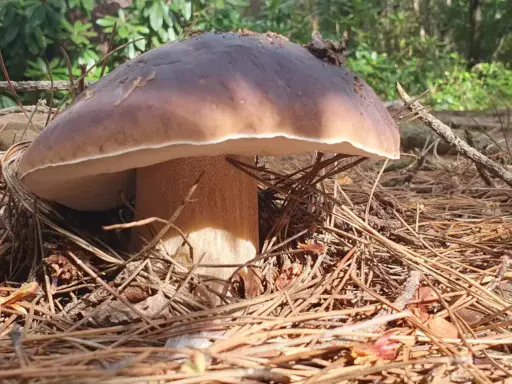
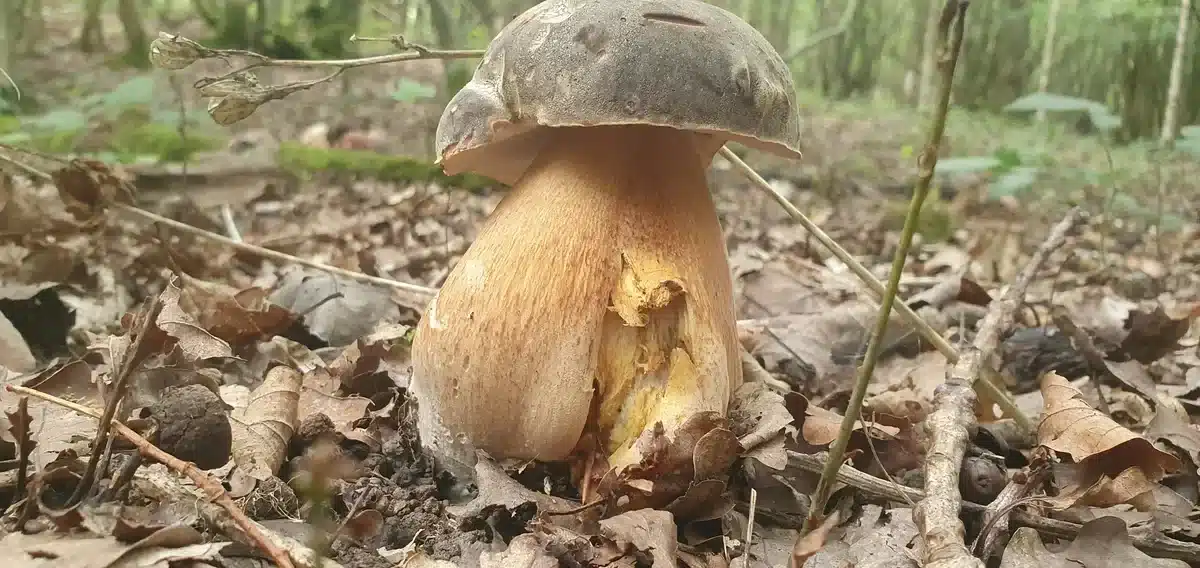
- Cap: This is often the most striking feature. The cap is usually a very dark brown, almost black, and can have a beautiful velvety or sueded texture. Sometimes, especially in dry weather, it might crack slightly, showing paler flesh underneath. It starts off broadly convex, like a bun, and then flattens out a bit as it matures.
- Pores (not gills!): Instead of gills, boletes have a spongy layer of tubes underneath the cap. For the Bronze Bolete, these pores start off whitish or creamy yellow, becoming more yellowish-green or olive as the mushroom ages. Crucially, they do *not* bruise blue when pressed or cut, unlike some other boletes you should avoid.
- Stem: The stem is stout and robust, often bulbous or club-shaped at the base. It’s a reddish-brown colour, and look closely, you’ll see a fine, raised, net-like pattern (this is called reticulation) against a paler background, particularly towards the top.
- Flesh: When you cut into a Bronze Bolete, the flesh should be firm and white. It remains white or changes only very slightly, usually not blueing, which again, is a good sign.
- Spore Print: If you were to take a spore print (placing the cap on paper overnight), it would be an olive-brown colour. For beginners, visual ID is more important, but it’s a detail worth knowing.
Where and When to Find It
In East Sussex, the Bronze Bolete loves our mature woodlands. You’ll typically find it growing on the ground, often in association with oak, beech, and sometimes chestnut trees. These mushrooms form a symbiotic relationship with trees, so looking near ancient specimens is always a good bet. Our local spots like parts of Ashdown Forest or St. Leonard’s Forest, with their old mixed deciduous trees, can be prime hunting grounds. Keep an eye out in late summer and early autumn, usually from August through to October. A warm, wet spell after a dry period can trigger a flush of these beauties, so keep an eye on the weather!
Sustainable Foraging Tips
Foraging is a wonderful way to connect with nature, but we must do it responsibly to ensure our natural treasures are there for generations to come.
- Take Only What You Need: Never strip an area bare. Take only a few healthy specimens, leaving plenty behind to sporulate and ensure future growth.
- Respect the Land: Always make sure you have permission if you’re on private land. Stick to public rights of way and avoid disturbing wildlife.
- Handle with Care: Use a sharp knife to cut the stem at the base, leaving the mycelial network undisturbed.
- Basket, Not Bag: Carry your mushrooms in a breathable basket or paper bag. This allows spores to drop out as you walk, helping to spread the species. Plastic bags trap moisture and can make your harvest spoil faster.
- Know Your Limits: If you’re new to foraging, go with an experienced guide or join a local foraging group. Never eat anything you’re not 100% sure about. There are no second chances with some poisonous mushrooms.
Happy foraging, and good luck finding your very own Bronze Bolete here in the beautiful wilds of East Sussex!