Introduction:
Few mushrooms are as instantly recognizable as the Fly Agaric, Amanita muscaria. With its bright red cap dotted with white warts, it’s often the star of woodland walks and fairy-tale illustrations alike. Found throughout East Sussex woodlands, this iconic fungus is as fascinating to study as it is photogenic — though it’s not one to eat casually!
Description & Identifying Features:
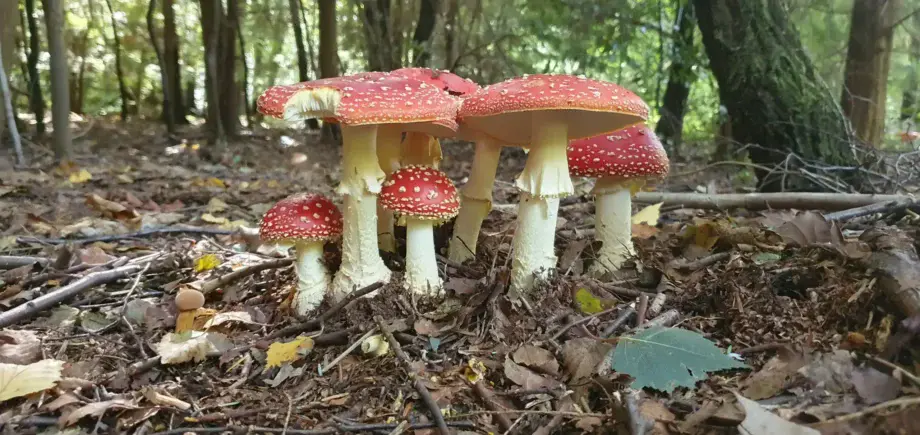
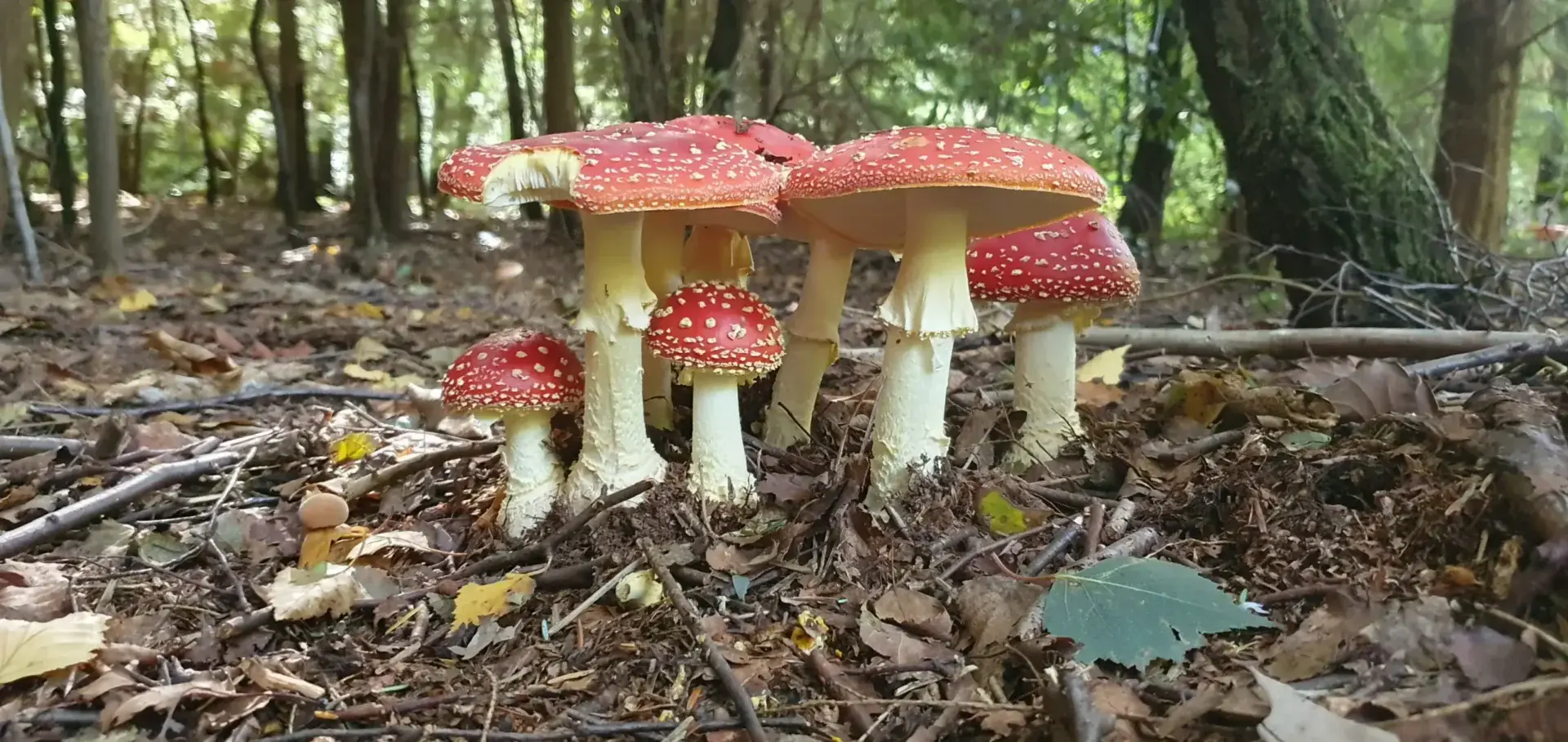
The Fly Agaric is famous for its vivid red cap, usually 8–20 cm across, covered in small, white wart-like spots. Its stem is white, thick, and topped with a ring (or annulus), and the base is bulbous, often with a volva partially buried in the soil. The gills underneath the cap are white and free from the stem. Young specimens can appear orange or pale red, and the cap often flattens with age. Its striking color makes it almost impossible to miss in the woodland.
Habitat:
Fly Agaric grows in woodlands, particularly under birch, pine, and spruce trees, forming a symbiotic mycorrhizal relationship with the roots. It prefers moist, well-drained soil and is often seen among leaf litter, moss, or grass at the edges of woodland paths.
Time of Year:
This species typically appears in late summer through autumn, peaking in September and October in East Sussex. After heavy rainfall, the mushrooms can emerge in large numbers, creating the classic “fairy ring” scenes.
Safety & Edibility:
The Fly Agaric is poisonous if eaten raw and should never be consumed casually. It contains compounds that can cause nausea, hallucinations, and other serious effects. Historically, it has been used in traditional practices after careful preparation to reduce toxicity, but for modern foragers, it is best admired for its beauty rather than eaten.
Foraging Tips:
- Look under birch, pine, and spruce trees, especially in mossy or leaf-covered soil.
- Admire, don’t harvest — it’s not safe for casual consumption.
- Take photos — its striking red-and-white appearance makes it a favorite for nature photography.
- Be aware of children and pets — its bright color can attract attention, but it’s toxic if ingested.
- Observe ecological roles — it’s an important part of woodland ecosystems, forming symbiotic relationships with trees.
Conclusion:
The Fly Agaric is one of the most iconic mushrooms you can encounter in East Sussex woodlands. Even though it’s not edible for a regular meal, its striking appearance and fascinating ecology make it a must-see for anyone exploring the forest. Keep your camera ready, admire its beauty safely, and appreciate its vital role in woodland habitats.