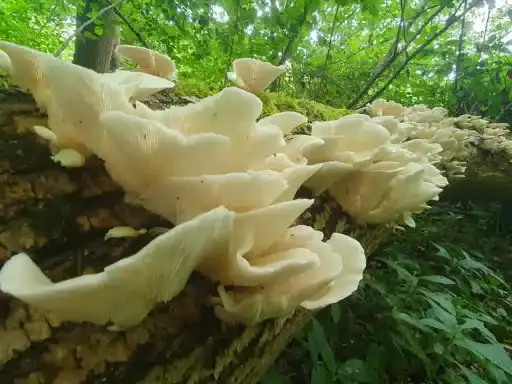

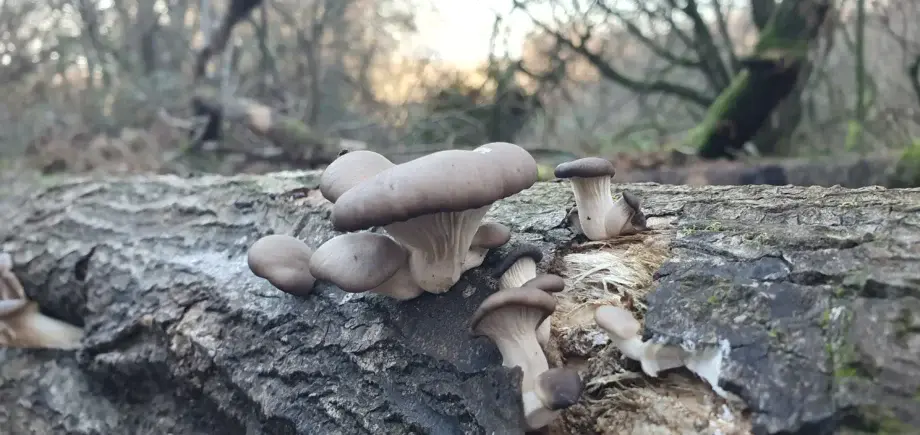
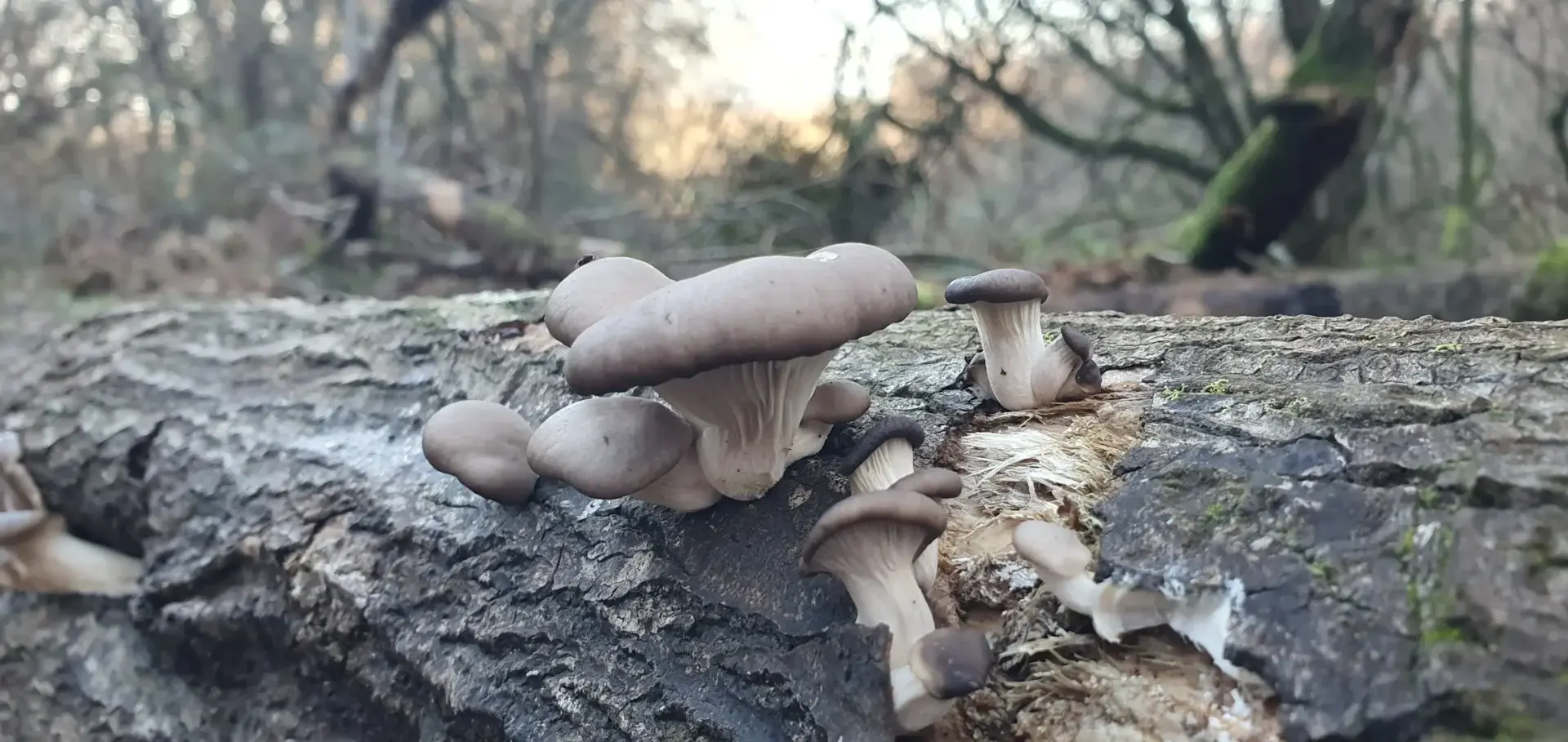
The Blue Oyster Mushroom, Pleurotus ostreatus, is one of the most beautiful and accessible wild mushrooms found in East Sussex woodlands. Often referred to as either Blue Oyster or Grey Oyster, these are not separate species but the same mushroom, with colour variations influenced by growing conditions. Factors such as substrate, light levels, temperature, and especially the age of the mushroom can cause caps to range from deep blue when young to pale grey or almost cream as they mature. With a mild, savoury flavour and tender texture, Pleurotus ostreatus is both a favourite among foragers and widely cultivated by growers, prized for its versatility in the kitchen as much as its elegant, shelf-like form.
Description & Identifying Features:
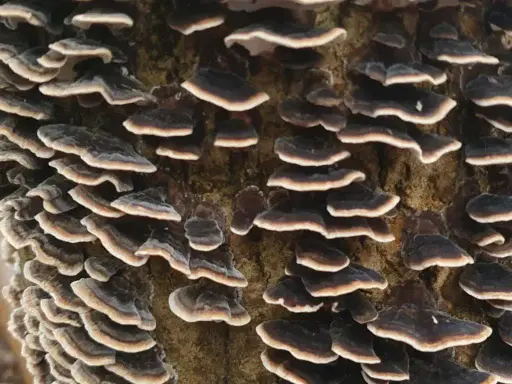
Blue Oyster mushrooms grow in overlapping clusters of fan-shaped or oyster-like caps, typically attached laterally to wood. When young, the caps display striking blue to slate-grey tones that gradually fade to pale grey or cream as they mature. The surface is smooth and slightly glossy in damp conditions.
The gills are white to pale grey, running down the short or nearly absent stem (a feature known as decurrent gills). Caps usually range from 5–15 cm across, with thin flesh and gently curved margins. Their overall appearance is graceful and layered, making them relatively easy to identify once you are familiar with them.
Habitat:
Blue Oyster mushrooms are saprotrophic, meaning they grow on dead or dying wood rather than from the soil. They are commonly found on deciduous trees, particularly beech, oak, and willow, growing on fallen logs, stumps, and standing deadwood.
They often appear several feet above the ground, forming cascading shelves along the sides of logs or trunks. Look in damp, shaded woodland areas where fallen timber has been left to decompose naturally.
Time of Year:
In the wild, Blue Oyster mushrooms typically fruit from late autumn through winter, especially during cooler periods following rainfall. They are notably cold-tolerant and can continue growing even after light frosts, making them a welcome find when many other species have faded.
Safety & Edibility:
Blue Oyster mushrooms are edible, safe, and widely enjoyed, with a mild, slightly sweet flavour and a soft, meaty texture when cooked. They are excellent sautéed, added to soups, stir-fries, pasta dishes, and even used as a meat substitute in vegetarian cooking.
As all cultivated mushrooms, they should be thoroughly cooked before consumption, and only eaten when you are confident of correct identification. Avoid harvesting from polluted areas or roadside wood.
As Blue Oyster mushrooms are saprotrophic, they can be grown at home using a suitable growing medium or a ready-to-use Blue Oyster mushroom grow kit. Growing Blue Oysters at home is popular because they are relatively easy to cultivate, grow quickly, and can provide fresh, home-grown mushrooms with minimal equipment. A grow kit is also a convenient way for beginners to experience mushroom cultivation without needing to prepare their own substrate or maintain a more complex growing setup.
Foraging Tips:
- Look for layered clusters growing directly from hardwood logs or stumps.
- Note the decurrent gills and oyster-shaped caps — key identifying features.
- Harvest younger, firm specimens for the best texture and flavour.
- Cut clusters cleanly at the base to protect the underlying mycelium.
- Avoid waterlogged or yellowing mushrooms, which are past their best.
- Clean gently with a brush or damp cloth rather than washing.
- If unsure, consult a field guide or forage with an experienced mushroom hunter.
Conclusion:
Discovering Blue Oyster mushrooms in East Sussex is a rewarding experience, especially during the cooler months when edible fungi are less abundant. Their elegant form, reliable growth on wood, and excellent culinary value make them a standout species for both beginner and experienced foragers alike. Keep an eye on fallen hardwood after autumn rains, and you may be rewarded with one of the woodland’s most versatile and delicious fungi.