
Introduction:
The Common Puffball, Lycoperdon perlatum, is a classic and easy-to-recognize fungus found throughout the woodlands and grasslands of East Sussex. Its distinctive round shape and playful “puff” of spores when mature make it a favorite among both beginner and experienced foragers. Beyond its quirky appearance, it’s also a tasty addition to the kitchen when properly identified.
Description & Identifying Features:
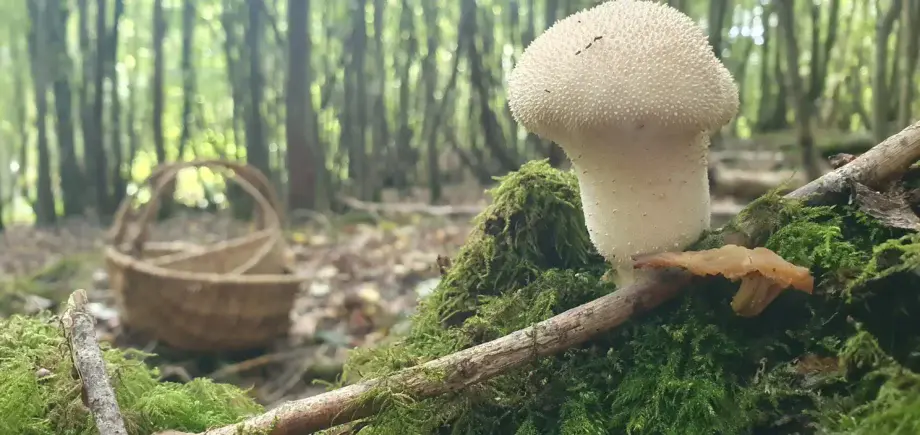
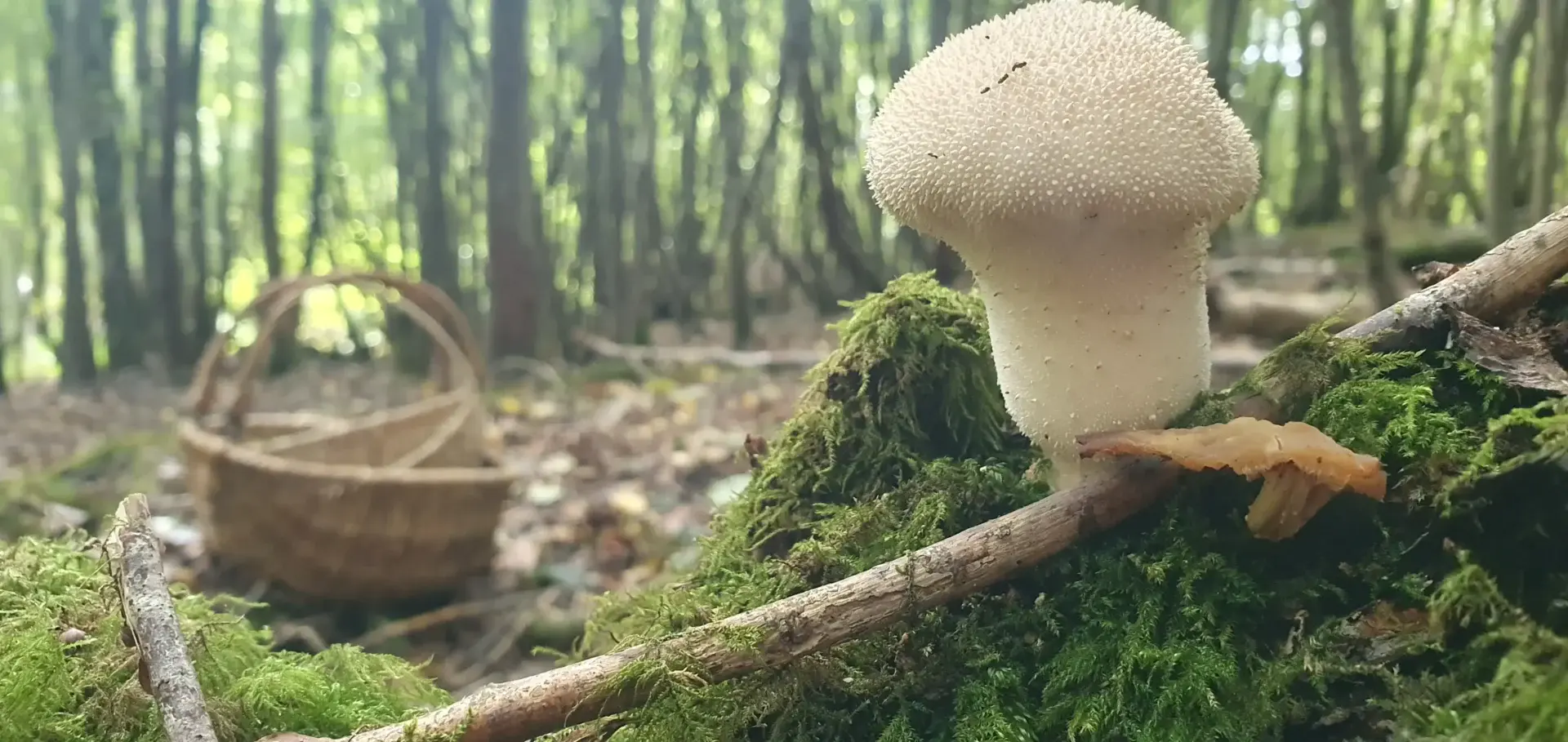
Common Puffballs are small to medium-sized, roughly 2–8 cm in diameter, and have a pearly-white exterior covered in tiny, rough warts or spines. When young, the interior is solid and white — the edible stage — but as the puffball matures, the inside turns yellow-brown and powdery, filled with spores. A gentle squeeze of a mature puffball will release a small cloud of brown spores, which is both fun to watch and a clear sign that it’s past its edible stage. Unlike many mushrooms, puffballs do not have gills, which helps prevent confusion with potentially toxic species.
Habitat:
Common Puffballs are versatile and can be found in grasslands, woodland clearings, paths, and mossy areas. They often grow in small clusters or scattered groups, preferring soil rich in organic matter. Look closely at open woodland floors, edges of fields, or damp grassy patches — they can be surprisingly easy to miss despite their round shape.
Time of Year:
Puffballs are typically found from late summer through autumn, sometimes lingering into early winter depending on weather conditions. Their small size and subtle presence make spotting them a rewarding experience for attentive foragers.
Safety & Edibility:
The young Common Puffball is edible and safe, prized for its mild, nutty flavor and soft texture. It can be sautéed, roasted, or added to soups and omelets. The key is to harvest only puffballs that are completely white inside, avoiding any that have started to turn yellow or brown. As with all wild fungi, proper identification is essential before consumption.
Foraging Tips:
- Check grassy areas and woodland clearings carefully — they often blend in with the soil.
- Cut puffballs at the base rather than pulling, to protect the surrounding soil and future growth.
- Avoid mature specimens — once the inside turns brown, it is no longer suitable for eating.
- Use immediately or store briefly in the fridge; young puffballs do not keep long.
- Squeeze test: a gentle squeeze of a white puffball should feel firm and solid, while older ones will release spores.
- Go with a guide if you’re new to puffballs — it helps ensure you don’t mistake them for small gilled mushrooms.
Conclusion:
Foraging for Common Puffballs in East Sussex is both fun and rewarding. Their round, warty appearance and soft, edible interior make them a charming find on woodland walks and grassy edges. Keep your eyes on the ground, harvest carefully, and enjoy one of the season’s most playful and tasty fungi.