
A good mushroom walk begins before anything goes into your basket. It starts with knowing where you can forage, understanding what you have found and deciding whether to leave it growing.
At The Mushroom Walk, we encourage a thoughtful approach: learn carefully, collect sparingly and respect the places you explore. Whether you’re taking your first woodland walk or developing your identification skills, these principles will help you forage responsibly.
Check before you collect
Being able to enter a woodland, park or field does not automatically mean you can pick mushrooms there. Public access, permission to collect and protection of wildlife are separate matters.
Before visiting, check the land manager’s website and any notices at the entrance. Ask permission where needed, and follow restrictions on collecting. An open gate or an absence of signs is not proof that foraging is permitted.
A public footpath across farmland does not give you permission to wander into neighbouring fields. Respect crops, livestock and the people who work on the land.
Understand the rules where you are
Foraging rules vary across the UK, and local restrictions can apply.
In England and Wales, section 4(3) of the Theft Act 1968 provides a limited exception concerning the picking of wild mushrooms, flowers, fruit and foliage for non-commercial purposes. This is not a general right to enter land or forage wherever you choose. Access restrictions, wildlife protection and local byelaws still matter. Read the legislation.
Scotland has a different access framework. Its Outdoor Access Code recognises customary collection of wild fungi for personal consumption, while collecting for commercial purposes requires the landowner’s or manager’s permission. Read Scotland’s wild food guidance.
Always check the rules for your destination, particularly when travelling elsewhere in the UK or abroad.
Leave rare fungi and sensitive habitats undisturbed
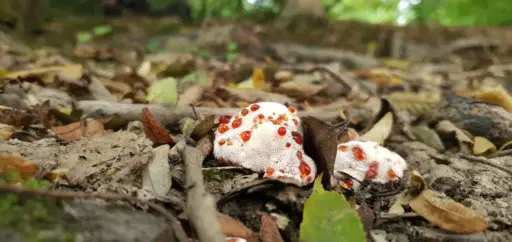
A mushroom does not need to be edible to deserve protection. Fungi are part of the habitat, and uncommon species are best enjoyed where they grow.
Leave known rare or protected fungi untouched. Certain species have legal protection, and a landowner’s permission alone does not remove that protection. Find out about protected fungi.
On nature reserves and Sites of Special Scientific Interest, check directly with the managing organisation before collecting. Our recommended approach is to observe and photograph unless collecting has been expressly agreed and any necessary conservation permissions are in place.
Take a small amount and leave plenty behind
Finding a large group of mushrooms is an opportunity to look closely, rather than a reason to fill every container.
If collecting is permitted, take only what you can identify and reasonably use. Leave small or scattered groups alone, and remember that other visitors may also be collecting from the same area.
There is no single quantity that makes picking responsible in every setting. A modest harvest in one woodland could be excessive in another. Follow any site limits and consider the abundance of fungi, the sensitivity of the habitat and the pressure it already receives.
Protect the woodland floor
Careful footsteps matter. Avoid trampling vegetation, disturbing wildlife or repeatedly searching through the same small patch.
Do not rake through leaf litter, strip bark or break apart rotting logs to find mushrooms. Leave deadwood in place and avoid disturbing the soil around your finds.
Keep dogs under control, leave gates as you find them and take your litter home. These habits are part of the wider Countryside Code.
Identify carefully before considering food
Never eat a wild mushroom unless its identity and edibility have been established with certainty. A resemblance to a photograph, an app suggestion or a casual online comment is not enough.
Identification can involve the cap, underside, stem, stem base, habitat and other features. Some species need specialist examination, and some cannot be identified reliably from photographs alone.
Where collecting is allowed, an experienced guide may examine a complete specimen because important features can be hidden at the stem base. Keep any specimens collected for study separate from mushrooms intended for food.
Avoid collecting food from potentially contaminated ground or areas that may have been chemically treated. Follow species-specific preparation advice: cooking does not make an unidentified or poisonous mushroom safe. See the government’s safe foraging guidance.
Frequently asked questions
Can I pick mushrooms in any public woodland?
No. Public access does not necessarily include permission to collect. Check the site’s rules and any local byelaws, and contact the land manager if you are unsure.
How many mushrooms am I allowed to take?
Check the rules for the particular site. A figure such as 1.5kg is a collecting guideline used by some foragers, not a universal UK legal allowance. For responsible personal collecting, take a modest amount from an abundant population and leave plenty behind.
Can I forage in a nature reserve?
Do not assume that you can. Reserves may restrict or prohibit collecting to protect habitats and wildlife. Ask the managing organisation; if permission is unclear, enjoy looking and photographing instead.
Should I cut mushrooms or pick them whole?
Preserving identification features and minimising disturbance are the priorities. Cutting off the stem base can remove features needed for identification. Where collecting is permitted, seek guidance on removing a specimen carefully without disturbing the surrounding habitat.
Can a mushroom identification app tell me whether something is safe to eat?
An app can suggest possibilities, but it should never decide what goes on your plate. Confirm identification with a suitably experienced person and reliable references. If doubt remains, do not eat it.
Is it safe if insects or slugs have eaten it?
No. Feeding marks do not tell you whether a mushroom is safe for humans. Identify the species independently.
Can I sell mushrooms that I collect?
Do not assume permission for personal collecting covers selling your finds. Commercial harvesting requires a specific agreement with the landowner or manager, alongside compliance with relevant conservation rules and food requirements.
Do I need to collect mushrooms to enjoy foraging?
No. Learning to notice fungi, recognise their habitats and record your discoveries can be rewarding without taking anything home. A walk with an empty basket can still be full of discoveries.

